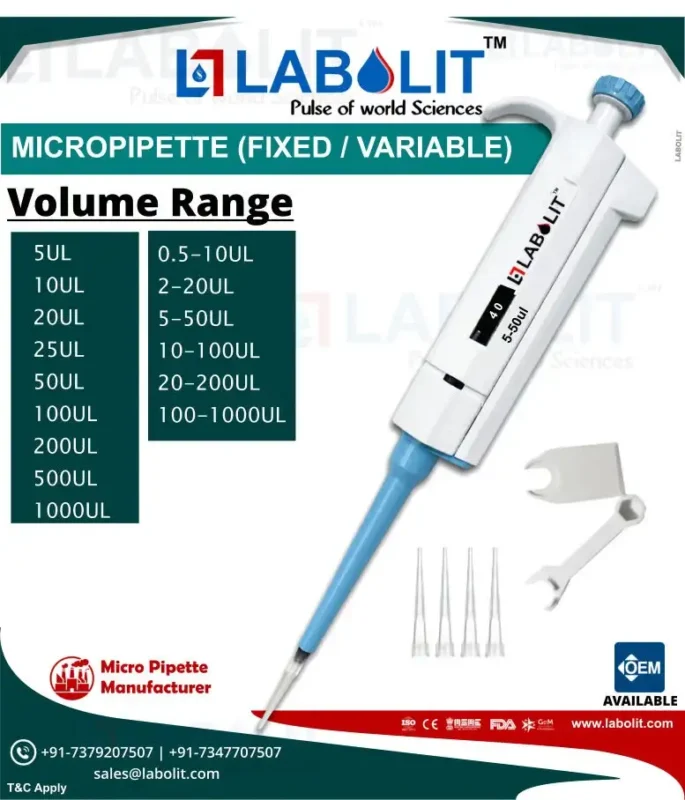
Which Brand of Micropipette Is Considered the Best? A Complete Guide

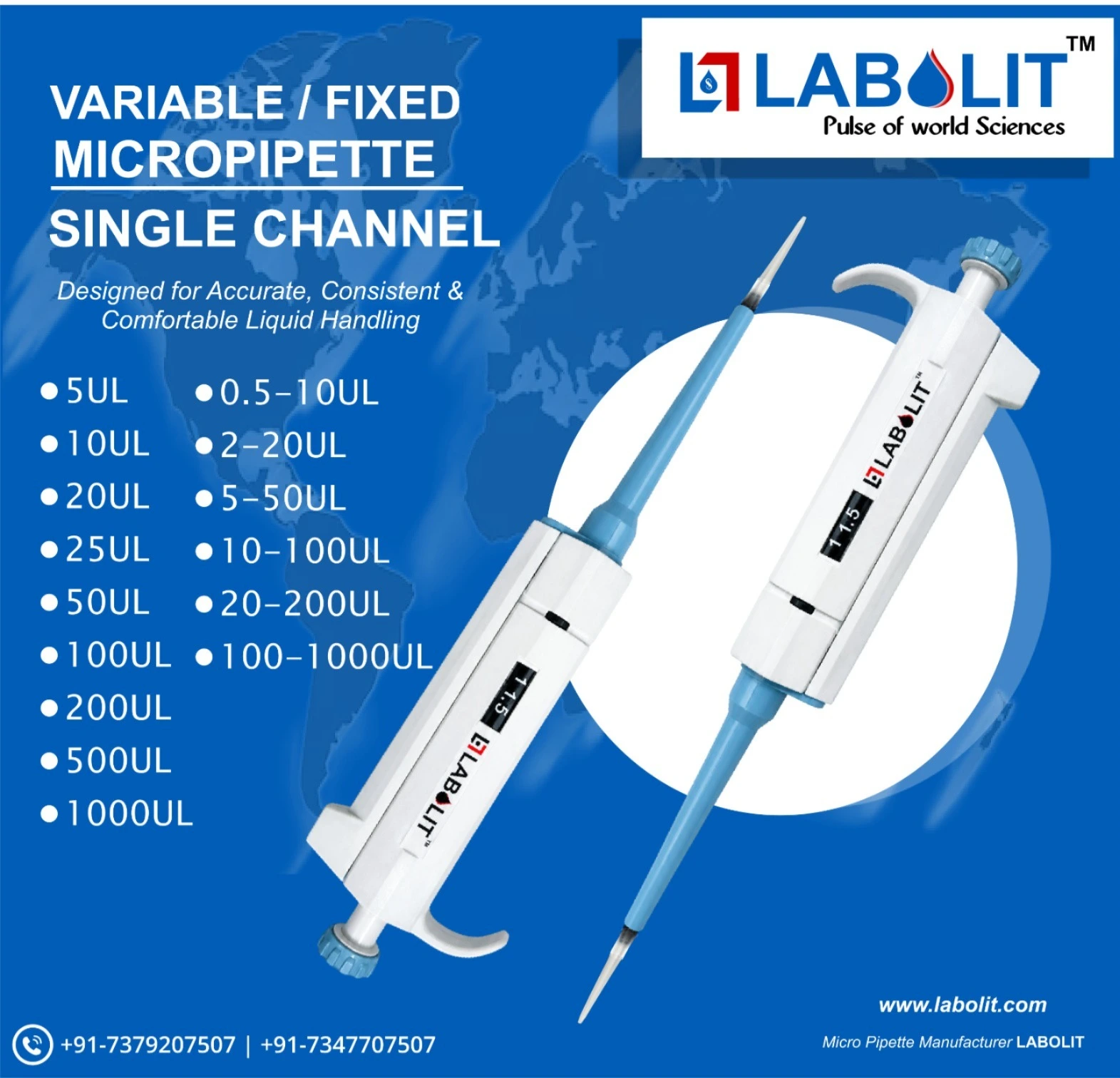
Choosing the right micropipette is an important decision for laboratories where accurate liquid handling, repeatability, durability, and comfortable operation are essential. With many brands, models, volume ranges, and price points available, laboratory professionals often ask: Which brand of micropipette is considered the best?
The answer depends on the application, required volume range, accuracy requirements, laboratory workload, budget, maintenance requirements, and available technical support. A micropipette that works well for routine educational applications may not necessarily be the right choice for a high-throughput pharmaceutical or biotechnology laboratory.
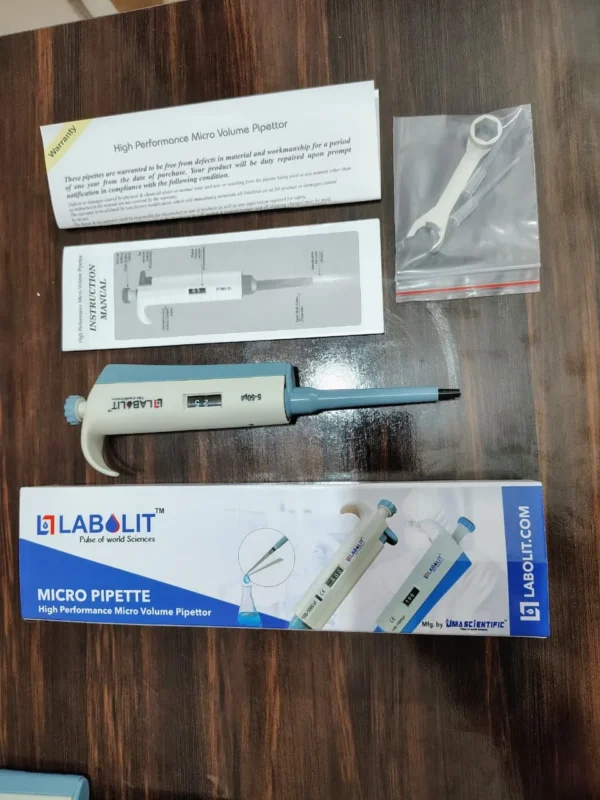
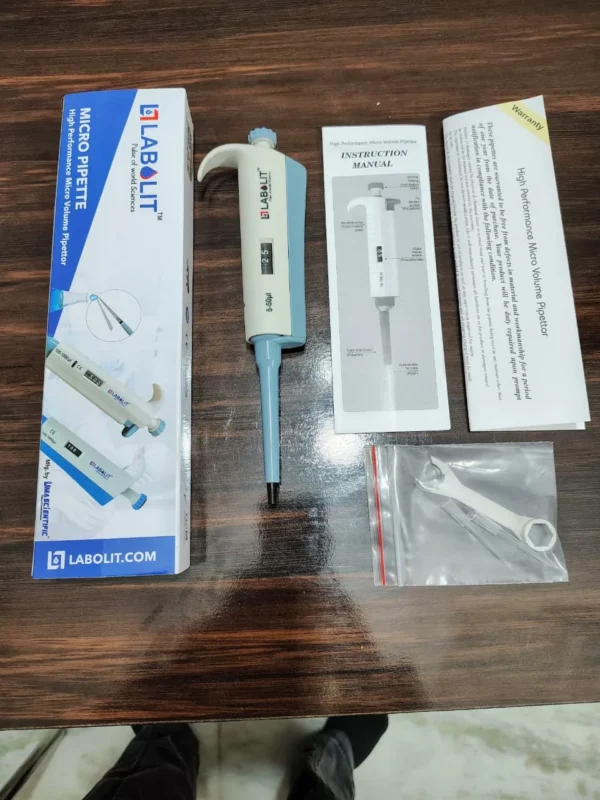
LABOLIT Private Limited provides a range of laboratory liquid-handling solutions, including single-channel micropipettes, multichannel micropipettes, fixed-volume micropipettes, variable-volume micropipettes, and laboratory pipette tips. The LABOLIT range is designed for applications across pharmaceutical industries, biotechnology research, diagnostic laboratories, hospitals, educational institutions, and research laboratories.
What Makes a Micropipette Brand a Good Choice?
A good micropipette should provide dependable liquid handling performance while being comfortable and practical for everyday laboratory work. Brand selection should therefore be based on measurable product characteristics rather than brand name alone.
Accuracy and Precision in Liquid Handling
Accuracy refers to how close the delivered volume is to the intended volume, while precision refers to the consistency of repeated dispensing. Both characteristics are important when working with small liquid volumes.
Understanding Micropipette Accuracy
For laboratory applications, accuracy becomes particularly important when dispensing reagents, samples, buffers, solutions, and other liquids in small quantities.
A suitable micropipette should be selected according to its intended volume range and application. Using a pipette close to the middle of its operating range can often provide better practical performance than repeatedly using a pipette at the extreme end of its range.
Why Precision Matters
Precision is especially important when multiple samples need to be processed using the same dispensing procedure. Consistent operation can help reduce variation between samples and improve laboratory workflow.
Build Quality and Durability
Laboratory equipment is frequently used, cleaned, transported, and handled repeatedly. The construction of a micropipette therefore matters.
Materials and Mechanical Construction
A well-designed micropipette should have a robust body, smooth operating mechanism, secure tip attachment, and ergonomic controls. Quality construction can contribute to longer service life and reliable routine operation.
LABOLIT micropipettes are available in different configurations to support different laboratory requirements, including routine liquid handling and professional laboratory applications.
Autoclavability and Laboratory Hygiene
Autoclavability can be an important consideration for laboratories where contamination control and sterilization are priorities.
Depending on the model, laboratories can select from fully autoclavable and semi-autoclavable micropipette options. Users should always follow the manufacturer’s instructions regarding autoclaving, temperature, duration, and maintenance.
Which Type of Micropipette Should You Choose?
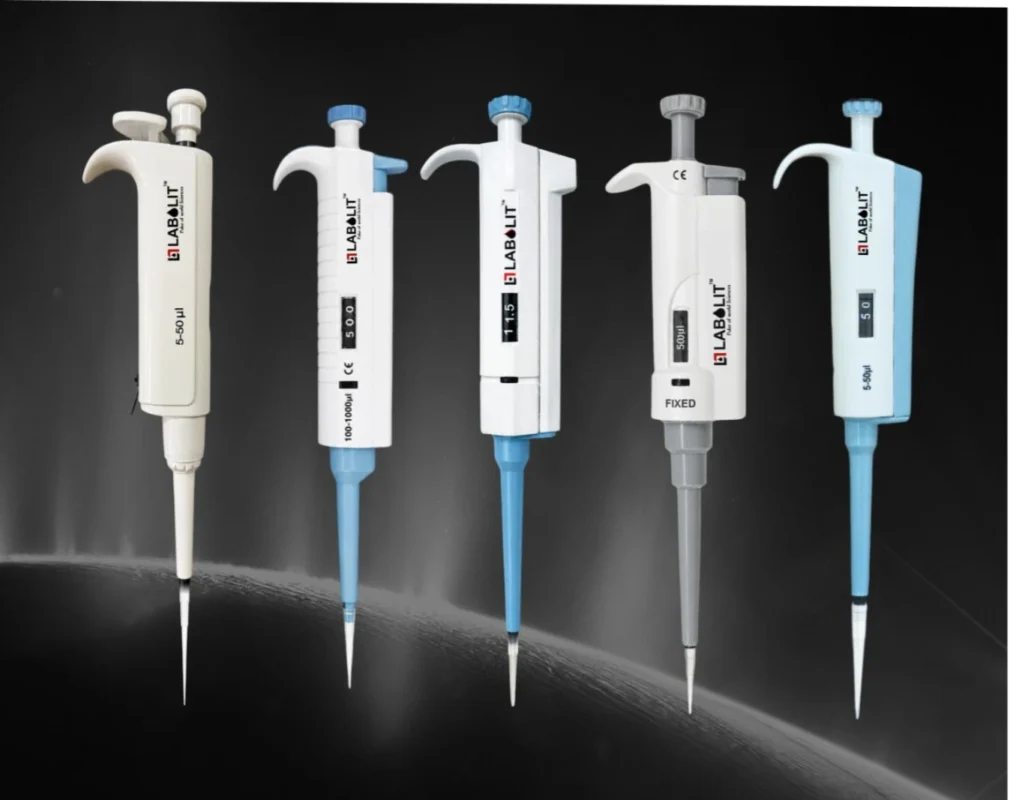
There is no single micropipette configuration suitable for every laboratory. The right choice depends on the number of samples, volume requirements, workflow, and type of application.
Single-Channel Micropipettes
Single-channel micropipettes are among the most commonly used liquid-handling instruments in laboratories.
Applications of Single-Channel Pipettes
They are suitable for transferring liquids individually between tubes, wells, containers, and laboratory vessels. They can be used in pharmaceutical laboratories, biotechnology laboratories, diagnostic laboratories, educational laboratories, and research environments.
LABOLIT offers single-channel micropipettes in multiple volume configurations for different liquid-handling requirements.
Variable-Volume Single-Channel Pipettes
Variable-volume micropipettes allow the user to select a required volume within the specified operating range.
LABOLIT variable-volume options include ranges such as 0.1–2 µL, 0.5–10 µL, 2–20 µL, 5–50 µL, 10–100 µL, 20–200 µL, 100–1000 µL, and larger-volume configurations, depending on the model.
Multichannel Micropipettes
Multichannel micropipettes are useful when several samples need to be processed simultaneously.
8-Channel and 12-Channel Options
LABOLIT multichannel micropipettes are available in configurations including 8-channel and 12-channel models, helping laboratories perform repeated liquid transfers more efficiently.
They can be particularly useful for microplate-based workflows, sample preparation, serial dispensing, and laboratory procedures involving multiple wells.
Benefits for High-Throughput Workflows
A multichannel pipette can reduce repetitive manual operations because multiple channels can dispense simultaneously.
For laboratories processing many samples, selecting an appropriate multichannel pipette can improve workflow efficiency and reduce repetitive pipetting movements.
How to Select the Best Micropipette for Your Laboratory
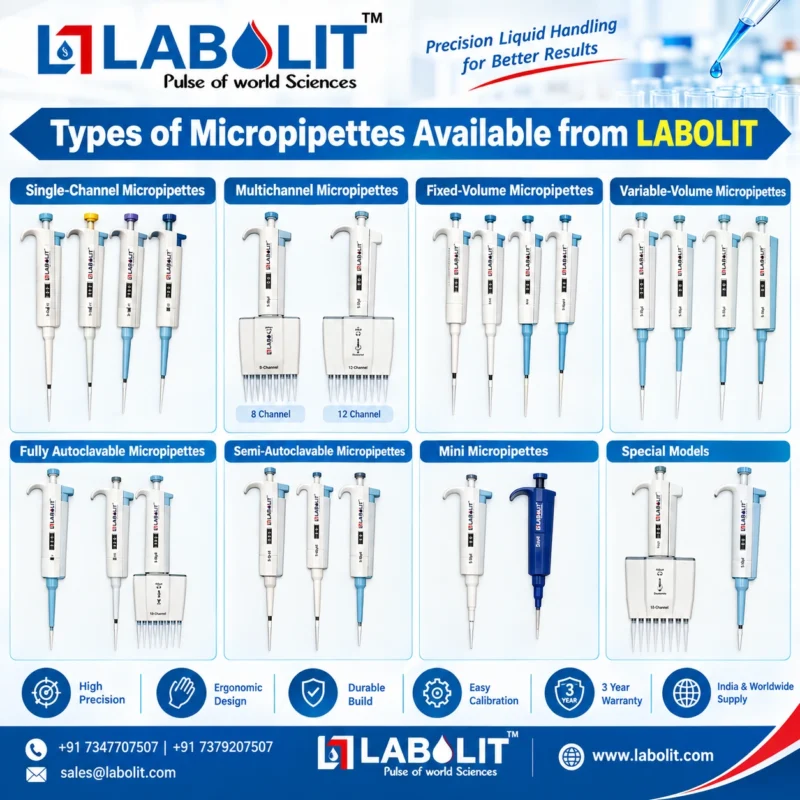
Instead of selecting a micropipette based only on brand recognition, laboratories should evaluate the product according to their actual requirements.
Select the Correct Volume Range
Volume range is one of the first specifications that should be checked before purchasing a micropipette.
Small-Volume Pipetting
For very small liquid volumes, laboratories may require pipettes designed specifically for low-volume applications. Models covering ranges such as 0.1–2 µL, 0.5–10 µL, or 2–20 µL can be considered according to the application.
Medium-Volume Pipetting
Medium-volume applications commonly use ranges such as 5–50 µL, 10–100 µL, 20–200 µL, and 100–1000 µL.
Choosing a volume range that closely matches the required dispensing volume can make routine laboratory work more convenient.
Large-Volume Pipetting
Some applications require higher liquid volumes. Depending on the laboratory workflow, higher-volume pipettes and liquid-handling solutions may be appropriate.
Users should select a model according to the manufacturer’s specified operating range rather than attempting to use a micropipette outside its intended capacity.
Consider Ergonomics and Ease of Use
A micropipette can be operated hundreds or thousands of times during routine laboratory work, making ergonomics an important purchasing factor.
Comfortable Plunger Operation
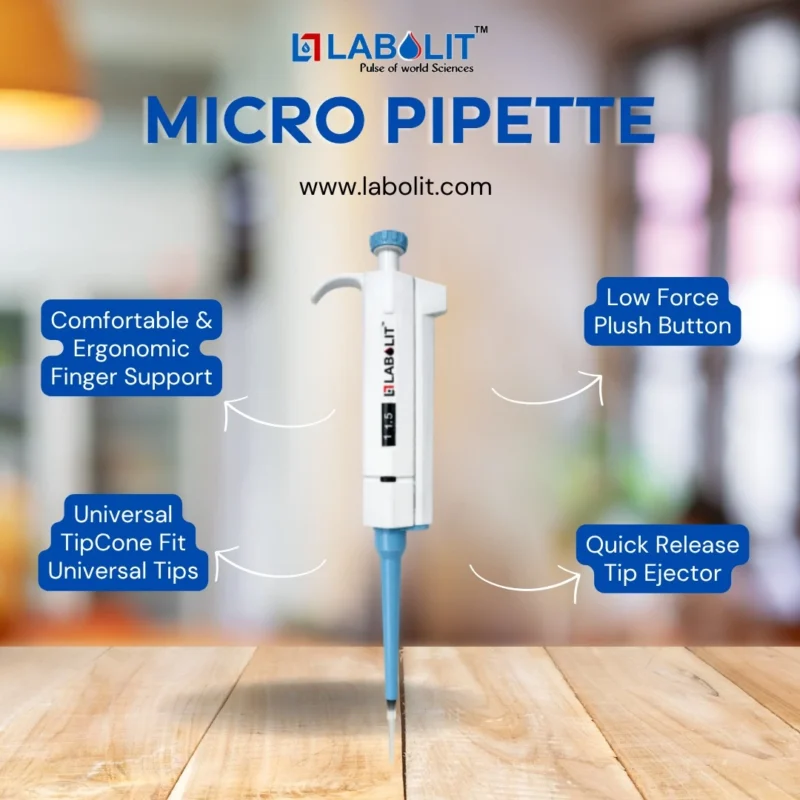
Smooth plunger movement can make repetitive pipetting more comfortable. The control mechanism should allow users to operate the pipette without excessive force.
Tip Ejection and Grip
A practical tip-ejection system and comfortable grip can simplify routine operation, particularly when many samples are processed in succession.
LABOLIT micropipette models are designed with practical laboratory operation in mind, with different models available for different volume ranges and application requirements.
LABOLIT Micropipettes for Laboratory Liquid Handling
LABOLIT Private Limited provides laboratory liquid-handling products for customers seeking micropipettes for routine and professional applications.
LABOLIT Micropipette Product Range
The LABOLIT range includes multiple micropipette configurations designed to accommodate different laboratory requirements.
UM-PRO Micropipette
The LABOLIT UM-PRO series is available for laboratory liquid-handling applications and is offered in selected volume configurations.
UM-PRIME Micropipette
The UM-PRIME range is designed for laboratories requiring practical and reliable manual liquid handling across applicable volume ranges.
UM-ECO Micropipette
The UM-ECO range provides an option for laboratories looking for a practical micropipette solution for routine applications.
UM-MAX Micropipette
The UM-MAX series is another LABOLIT micropipette option for laboratories requiring manual liquid handling across applicable volume ranges.
UM-ULTRA Micropipette
The UM-ULTRA series is available in fixed-volume and variable-volume configurations. The UM-ULTRA range includes fully autoclavable micropipette options for laboratories where sterilization is an important consideration.
UM-LABPRO Micropipette
The UM-LABPRO series is designed for laboratory liquid-handling applications and is available in selected configurations.
UM-MULTI Multichannel Micropipette
The UM-MULTI range includes multichannel micropipettes, including 8-channel and 12-channel configurations, for workflows where multiple samples need to be handled simultaneously.
Micropipette Price and Purchasing Options
The price of a micropipette depends on its type, volume range, channel configuration, materials, features, and intended application.
Affordable Micropipette Options
Laboratories do not always need the most expensive instrument for routine liquid handling. A suitable micropipette should provide the required specifications and performance for the intended application.
LABOLIT offers different micropipette models and configurations so customers can select an option according to their application and budget.
Micropipette Wholesale and Bulk Supply
For pharmaceutical companies, diagnostic laboratories, hospitals, educational institutions, research organizations, dealers, distributors, and laboratory equipment suppliers, bulk purchasing can be an important requirement.
LABOLIT supports bulk, dealer, distributor, OEM, and private-label requirements, subject to product and order specifications.
Why LABOLIT Is a Micropipette Brand to Consider
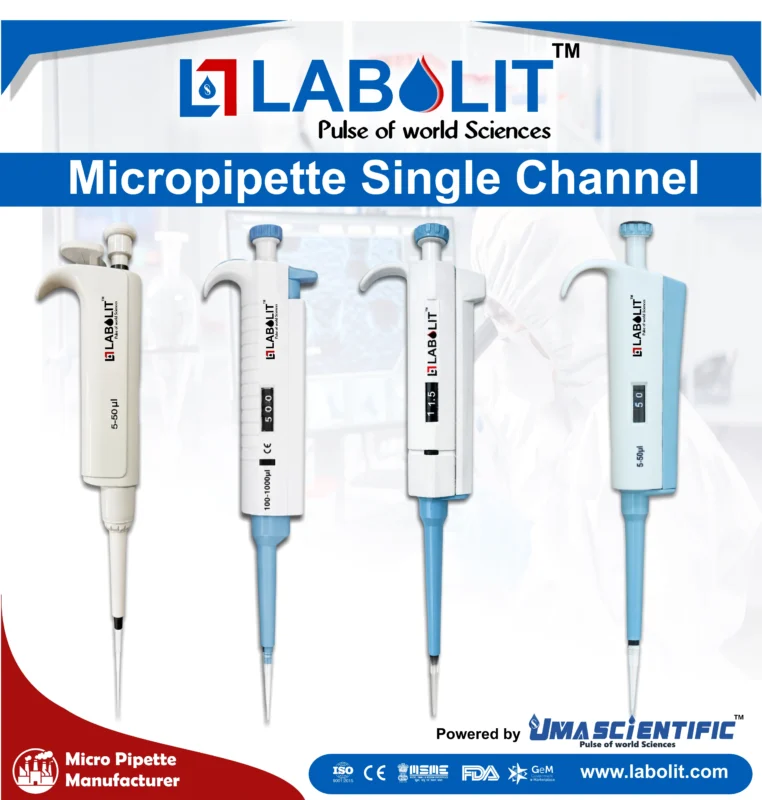
When evaluating a micropipette manufacturer or supplier, customers should consider product range, technical specifications, availability, support, customization requirements, and purchasing options.
Manufacturer and Supplier for Laboratory Pipettes
LABOLIT Private Limited provides laboratory liquid-handling products including micropipettes, multichannel micropipettes, pipette tips, bottle top dispensers, and other laboratory equipment.
Solutions for Different Laboratory Sectors
LABOLIT products can be used across a variety of laboratory environments, including:
- Pharmaceutical industries
- Biotechnology research laboratories
- Diagnostic laboratories
- Hospitals
- Educational institutions
- Research laboratories
- Quality-control laboratories
- Industrial laboratories
Domestic and Worldwide Supply
LABOLIT supplies laboratory products from India for customers requiring laboratory liquid-handling solutions in domestic and international markets.
For international buyers, product specifications, packaging, documentation, shipping requirements, and order quantities can be discussed according to the destination market and application.
Micropipette Selection Checklist
Before purchasing a micropipette, buyers can use the following checklist:
- Required dispensing volume
- Fixed or variable volume
- Single-channel or multichannel configuration
- Required number of channels
- Accuracy and precision requirements
- Autoclavability requirements
- Ergonomic requirements
- Compatible pipette tips
- Calibration requirements
- Warranty and after-sales support
- Quantity required
- Domestic or export supply requirements
- Budget and total cost of ownership
Fixed-Volume vs Variable-Volume Micropipette
Fixed-volume pipettes are designed for dispensing a specified volume, while variable-volume micropipettes allow the user to adjust the volume within a defined range.
The appropriate option depends on whether the laboratory repeatedly dispenses one specific volume or works with multiple volumes.
Manual vs Electronic Micropipette
Manual micropipettes are widely used for routine laboratory liquid handling and are available across many volume ranges.
Electronic pipettes can provide additional electronic controls and may be useful in applications involving repetitive pipetting. Laboratories should evaluate workflow, budget, maintenance, and user requirements before selecting between manual and electronic systems.
Micropipette Calibration and Maintenance
Even a high-quality micropipette requires proper handling and maintenance to maintain reliable performance.
Regular Calibration
Micropipette performance can change with usage, handling, environmental conditions, and maintenance history. Laboratories should establish an appropriate calibration and verification schedule based on their quality system and application requirements.
Proper Pipette Tip Selection
Using compatible, high-quality pipette tips is essential for effective liquid handling. Tips should fit securely and be appropriate for the micropipette model and volume being dispensed.
Correct Pipetting Technique
Users should follow proper pipetting practices, including appropriate plunger operation, correct immersion depth, controlled aspiration and dispensing, and avoiding unnecessary mechanical stress.
Proper technique can contribute significantly to repeatable liquid handling.
Choosing LABOLIT for Your Micropipette Requirement
The question “Which brand of micropipette is considered the best?” does not have one universal answer because laboratory requirements differ.
A better approach is to compare micropipettes according to volume range, accuracy, precision, ergonomics, autoclavability, channel configuration, compatibility, calibration, warranty, technical support, price, and application requirements.
LABOLIT offers a broad range of micropipettes, including single-channel, multichannel, fixed-volume, variable-volume, semi-autoclavable, and fully autoclavable options, allowing laboratories to select a configuration according to their specific requirements.
For laboratories looking for a micropipette manufacturer, micropipette supplier, micropipette wholesale supplier, affordable micropipette, laboratory pipette, or bulk micropipette supplier, LABOLIT provides multiple product configurations for domestic and international requirements.
Explore LABOLIT micropipettes and choose the model, volume range, and configuration that best matches your laboratory application.