Micropipette Price: Complete Buying Guide, Types, Features & Cost

Micropipette price is one of the most important factors considered by laboratories when purchasing precision liquid-handling equipment. However, the price of a micropipette can vary significantly depending on its volume range, channel configuration, construction, accuracy, precision, sterilization capability, ergonomics, warranty and intended application.
A low-cost micropipette may be suitable for basic laboratory work, while advanced research, diagnostic and pharmaceutical laboratories may require higher-performance models with specialized features.
This guide explains the major factors that influence micropipette price, the difference between single-channel and multichannel models, volume ranges, features to compare before buying, and how laboratories can select the right pipette according to their requirements.
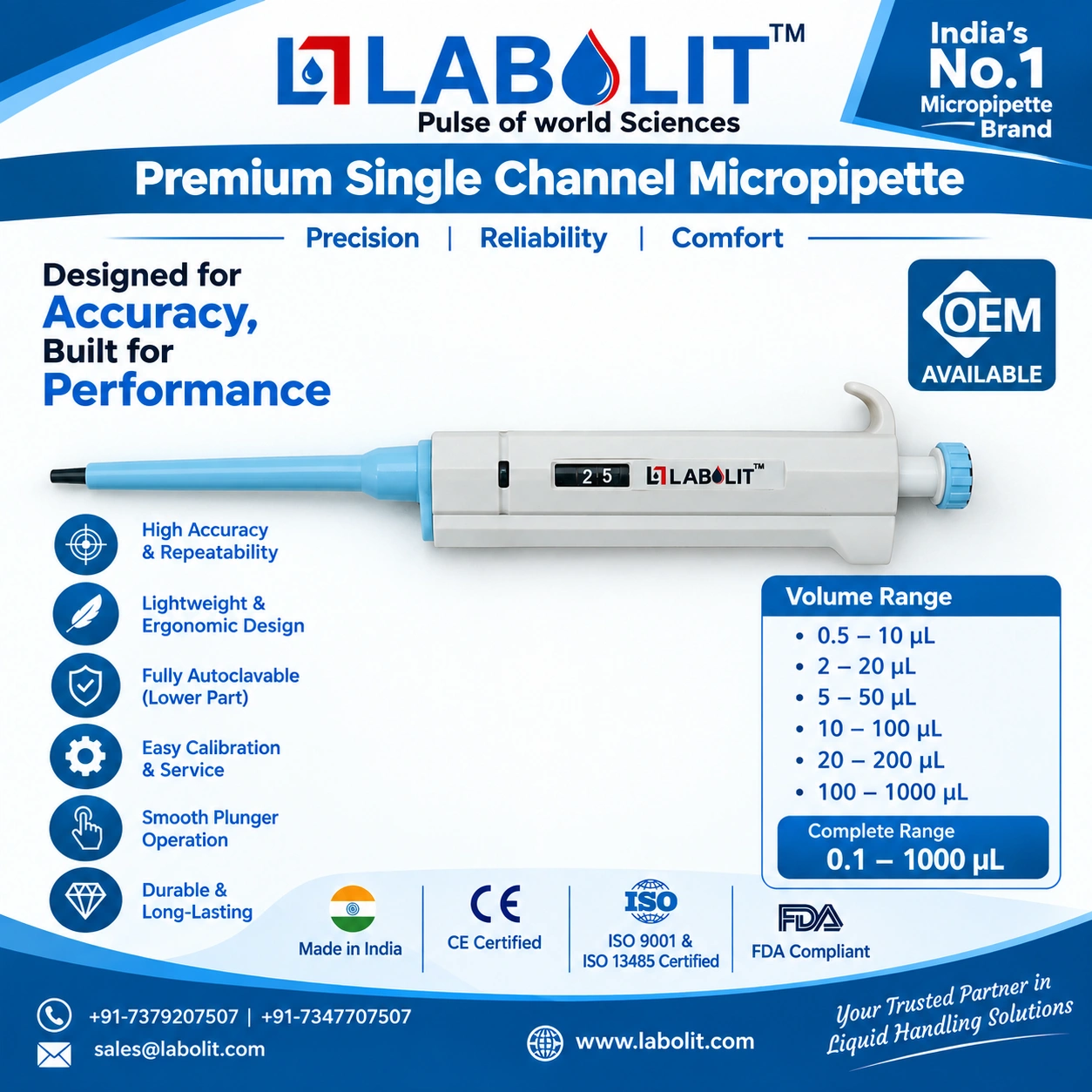
LABOLIT Private Limited provides a range of laboratory liquid-handling solutions, including single-channel micropipettes, multichannel micropipettes, micropipette tips and pipette stands for laboratories across India and international markets.
What Is a Micropipette?
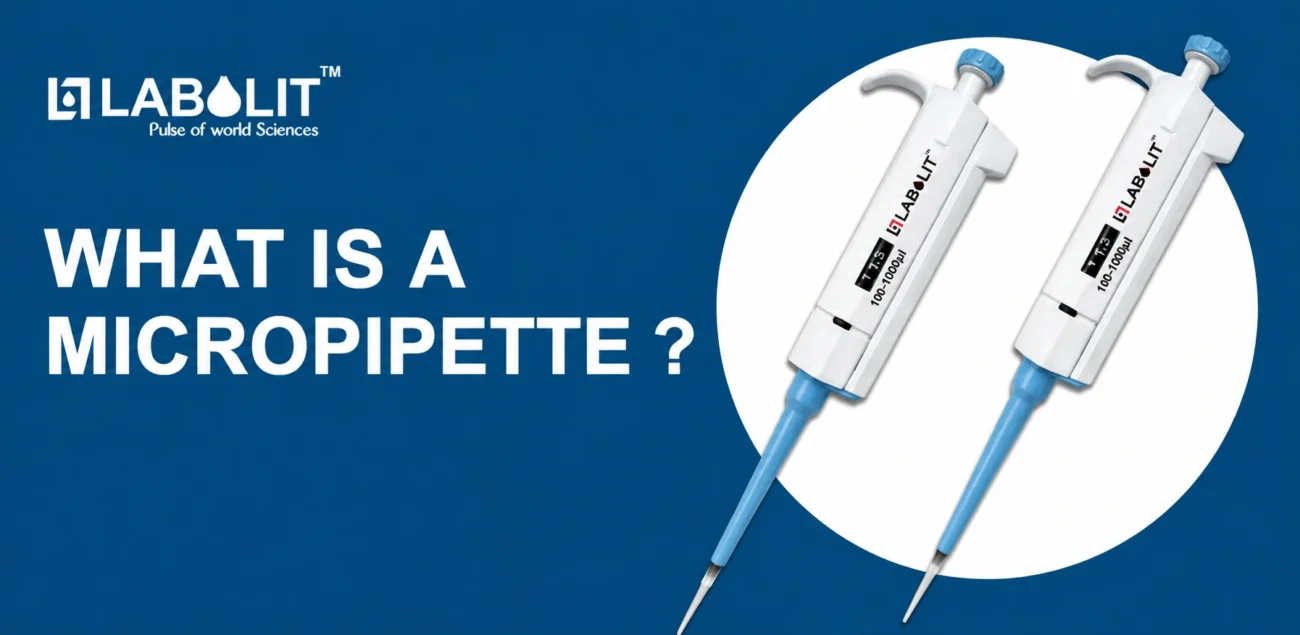
A micropipette is a precision laboratory instrument used to aspirate and dispense small quantities of liquid, generally measured in microliters (µL).
Micropipettes are commonly used in:
- Pharmaceutical laboratories
- Biotechnology laboratories
- Diagnostic laboratories
- Hospitals
- Microbiology laboratories
- Molecular biology laboratories
- Research institutions
- Universities
- Educational laboratories
The instrument allows users to transfer controlled quantities of samples, reagents, buffers, enzymes and other laboratory liquids.
What Determines Micropipette Price?

There is no single fixed price for every micropipette. Several technical and commercial factors influence the final cost.
1. Volume Range
The volume range is one of the most important factors.
Examples include:
- 0.1–2 µL
- 0.5–10 µL
- 2–20 µL
- 5–50 µL
- 10–100 µL
- 20–200 µL
- 100–1000 µL
- 1000–5000 µL
- Up to 10,000 µL for suitable applications
Different volume ranges require different internal mechanisms and tip specifications, so prices can vary between models.
2. Single Channel or Multichannel
A single channel micropipette contains one liquid-transfer channel and is generally designed for individual sample handling.
A multichannel micropipette contains multiple channels and can transfer liquid into several wells simultaneously.
Because multichannel pipettes contain additional mechanisms and channels, their price is generally higher than comparable single-channel models.
3. Fixed or Variable Volume
A fixed-volume micropipette is designed to deliver a specific volume.
A variable-volume micropipette allows the user to adjust the volume within a defined operating range.
Variable-volume models provide greater flexibility and can therefore have different pricing depending on their design and performance specifications.
4. Accuracy and Precision
Accuracy refers to how close the delivered volume is to the intended volume, while precision refers to the consistency of repeated measurements.
Higher-performance micropipettes designed for demanding applications may incorporate precision components and manufacturing controls that influence their cost.
5. Autoclavability
Some micropipettes are designed for sterilization or autoclaving.
Depending on the model, a pipette may be:
- Non-autoclavable
- Partially or semi-autoclavable
- Fully autoclavable
A fully autoclavable design can be useful for laboratories where sterilization requirements are important.
6. Materials and Construction
The materials used in the body, shaft, seals and internal components can influence durability, chemical compatibility and overall product cost.
A laboratory should select construction quality according to the intended application rather than choosing solely on the lowest price.
Micropipette Price by Type
Micropipette Price in India: ₹500 to ₹50,000+ Complete Buying Guide
Micropipette price in India can start from around ₹500 and go up to ₹50,000 or more, depending on the model, type, volume range, number of channels, operating mechanism and features.
Basic fixed-volume or junior micropipettes can be available at the lower end of the market, while professional single-channel, multichannel and electronic micropipettes can cost considerably more. Current market listings show substantial variation across these categories.
Therefore, there is no single price for a micropipette. The right price depends on the exact specification required by the laboratory.
Single Channel Micropipette Price
A single channel micropipette is commonly selected for routine laboratory liquid handling.
The price depends on:
- Volume range
- Fixed or variable configuration
- Accuracy
- Precision
- Ergonomic design
- Materials
- Autoclavability
- Warranty
- Manufacturer
- Accessories
Single-channel models are available across a broad range of specifications, making them suitable for both basic and advanced laboratory applications.
Multichannel Micropipette Price
A multichannel pipette can have 8 or 12 channels and is commonly used with microplates.
Its price can be influenced by:
- Number of channels
- Volume range
- Channel consistency
- Ergonomics
- Adjustment mechanism
- Tip compatibility
- Construction
- Sterilization capability
For laboratories performing repetitive microplate work, the productivity benefits of a multichannel micropipette can be more important than the initial purchase price alone.
Micropipette Price for Different Volume Ranges
The required volume should always be considered before comparing prices.
Low-Volume Micropipettes
Models designed for very small volumes, such as 0.1–2 µL or 0.5–10 µL, are commonly used in applications requiring precise low-volume liquid handling.
Medium-Volume Micropipettes
Ranges such as:
- 2–20 µL
- 5–50 µL
- 10–100 µL
- 20–200 µL
are widely used for routine laboratory applications.
High-Volume Micropipettes
Models such as 100–1000 µL and 1000–5000 µL are suitable for larger liquid-transfer requirements within their specified operating ranges.
For volumes beyond conventional micropipette ranges, laboratories should use an appropriate liquid-handling instrument designed for that application.
Is the Cheapest Micropipette the Best Choice?
Not necessarily.
The lowest micropipette price does not always represent the lowest overall cost of ownership.
A laboratory should consider:
- Accuracy
- Precision
- Durability
- Tip availability
- Calibration requirements
- Warranty
- Service support
- Replacement parts
- Ergonomics
- Application suitability
A micropipette that performs consistently and lasts longer may provide better value than a cheaper instrument that requires frequent replacement or servicing.
Micropipette Price vs Quality
Price and quality should be evaluated together.
A quality micropipette should provide appropriate:
- Volume control
- Ergonomic operation
- Consistent liquid delivery
- Tip compatibility
- Mechanical performance
- Cleaning and maintenance options
- Manufacturer support
For professional laboratories, reliability can be more important than simply minimizing the initial purchase cost.
Micropipette Price and Warranty
Warranty is another factor that should be considered when comparing products.
Before purchasing, check:
- 3 year Warranty duration
- What components are covered
- Replacement conditions
- Service availability
- Calibration support
- Technical assistance
A clear warranty and after-sales support program can reduce the long-term risk associated with laboratory equipment purchases.
Micropipette Price for Bulk Orders
Laboratories, distributors, institutions and businesses purchasing multiple units may have different commercial requirements than individual buyers.
For bulk procurement, pricing can depend on:
- Quantity
- Model selection
- Volume ranges
- Accessories
- Packaging
- Delivery requirements
- OEM/private-label specifications
- Export destination
- Commercial terms
For large orders, buyers should request a detailed quotation rather than relying only on a retail or online listing price.
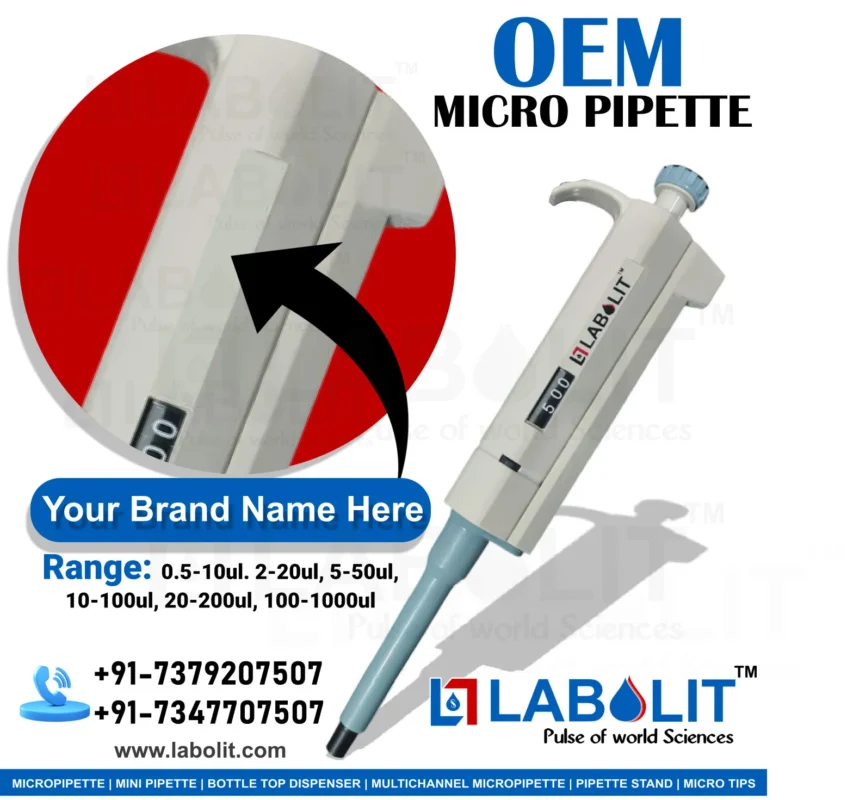
OEM and Private-Label Micropipette Pricing

OEM and private-label requirements can involve customized commercial arrangements.
A buyer may require:
- Custom branding
- Customized packaging
- Product labeling
- Dealer packaging
- Bulk quantities
- Specific volume combinations
- Export documentation
- Customized commercial terms
The final OEM price depends on the required specification, quantity, packaging and other project requirements.
LABOLIT supports OEM/private-label and bulk supply requirements for suitable customers and markets.
Micropipette Price in India
The Indian market includes micropipettes across a wide range of price points.
When comparing products in India, buyers should evaluate more than the displayed price.
Important considerations include:
- Manufacturer reputation
- Product specifications
- Volume range
- Accuracy and precision
- Warranty
- Availability of tips
- Service support
- Calibration facilities
- Replacement parts
- Delivery
- Bulk pricing
For institutional and professional laboratory purchases, obtaining a formal quotation can provide a clearer comparison than comparing online prices alone.
How to Choose a Micropipette Based on Budget?
Instead of choosing a micropipette only by price, divide your requirements according to application.
For Basic Laboratory Applications
Choose a reliable model with the required volume range and compatible tips.
For Routine Professional Applications
Prioritize accuracy, precision, ergonomics, durability and after-sales support.
For Microplate Work
Consider an 8-channel or 12-channel multichannel micropipette.
For Sterile Applications
Consider a model designed according to the laboratory’s sterilization requirements.
For Bulk Procurement
Request a quotation based on the required quantity and exact specifications.
For OEM Requirements
Discuss the required branding, packaging, volume ranges, quantity and commercial requirements with the manufacturer.
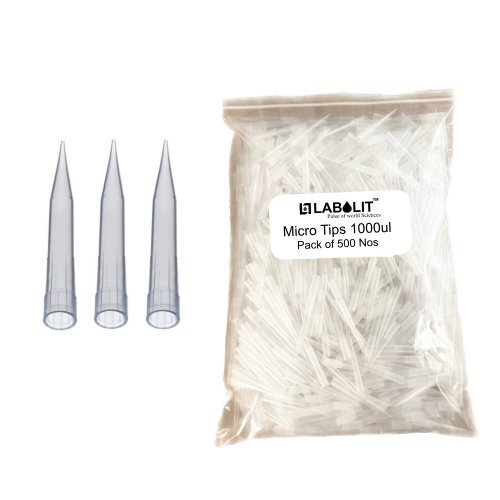
Micropipette Tips and Their Cost
Micropipette tips are an important part of the overall cost of liquid handling.
The cost of tips depends on:
- Tip volume
- Material
- Sterility
- Packaging
- Compatibility
- Filter requirements
- Quantity
A laboratory should consider tip consumption when calculating the total cost of ownership of a micropipette.
Using compatible, good-quality tips is important for reliable pipetting performance.
Micropipette Stand and Accessories
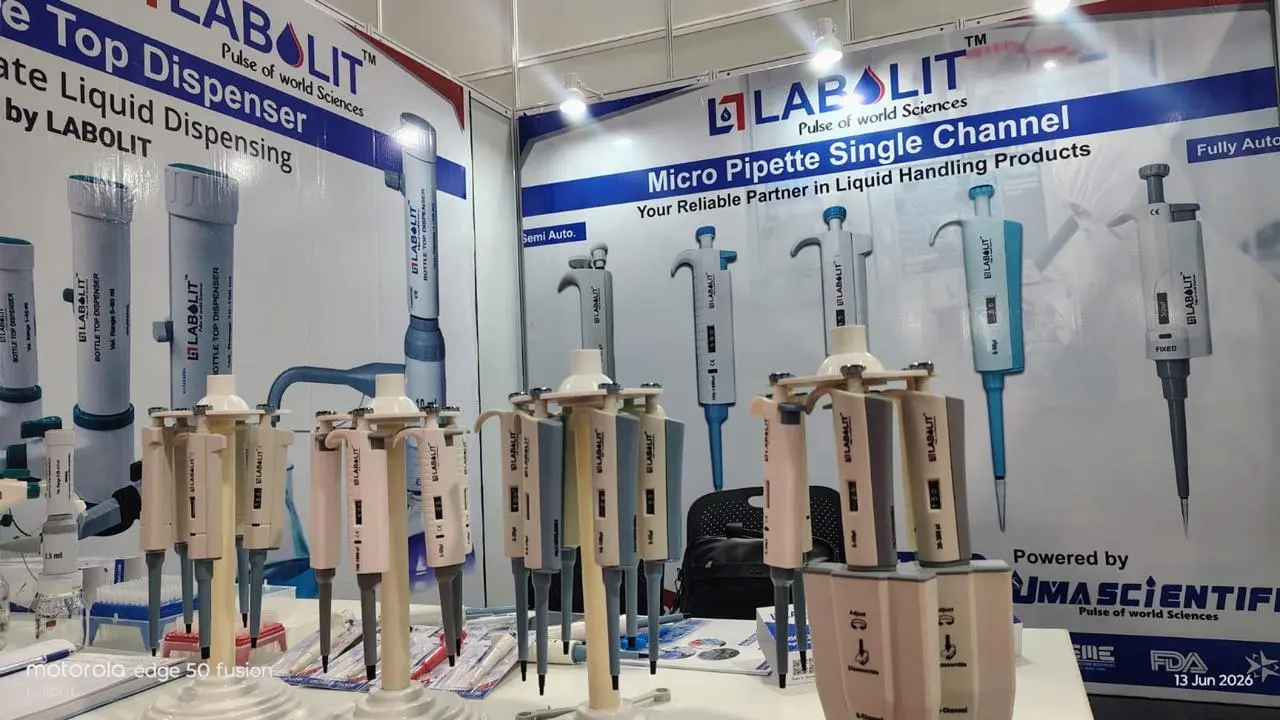
A micropipette stand is useful for safely storing pipettes between uses.
Other accessories may include:
- Pipette tips
- Tip boxes
- Tip racks
- Calibration accessories
- Replacement components
- Storage systems
Accessories should be selected according to the specific micropipette model.
Micropipette Calibration and Long-Term Cost
Micropipette calibration is important for maintaining confidence in liquid delivery performance.
The cost of ownership can include:
- Initial purchase
- Calibration
- Maintenance
- Replacement parts
- Tips
- Servicing
- Accessories
A laboratory should consider these factors when comparing different micropipette options.
Calibration frequency should be established according to the laboratory’s quality system, usage and application requirements.
Features to Check Before Buying a Micropipette
Before purchasing a micropipette, check the following:
Volume Range
Make sure the required volume falls comfortably within the specified operating range.
Channel Configuration
Choose single-channel, 8-channel or 12-channel according to your workflow.
Accuracy and Precision
Review manufacturer specifications for the intended application.
Ergonomics
The pipette should be comfortable for repetitive laboratory use.
Tip Compatibility
Confirm that compatible tips are readily available.
Sterilization
Check whether the model is suitable for the laboratory’s cleaning and sterilization requirements.
Warranty
Understand the warranty and service terms before purchasing.
Manufacturer Support
Technical support, servicing and replacement components can be important over the life of the instrument.
Common Mistakes When Comparing Micropipette Prices
Comparing Different Volume Ranges
A low-volume pipette and a high-volume pipette are not directly comparable simply because both are called micropipettes.
Ignoring Tip Costs
The pipette is only one part of the liquid-handling cost.
Ignoring Calibration
Performance verification can be important for professional laboratory applications.
Focusing Only on the Purchase Price
Durability, warranty and service can significantly influence long-term value.
Choosing an Incompatible Tip
Incorrect tips can affect performance and increase operating problems.
LABOLIT Micropipette Range
LABOLIT Private Limited provides laboratory liquid-handling solutions for pharmaceutical, biotechnology, diagnostic, research, healthcare and educational applications.
The range includes:
- Single-channel micropipettes
- Multichannel micropipettes
- Fixed-volume micropipettes
- Variable-volume micropipettes
- Micropipette tips
- Micropipette stands
- Other liquid-handling solutions
LABOLIT supports requirements across India and international markets, including bulk procurement, dealer supply, OEM/private-label opportunities and export requirements.
The right micropipette should be selected according to the laboratory’s required volume, application, performance expectations and budget.
Frequently Asked Questions About Micropipette Price
What is the price of a micropipette?
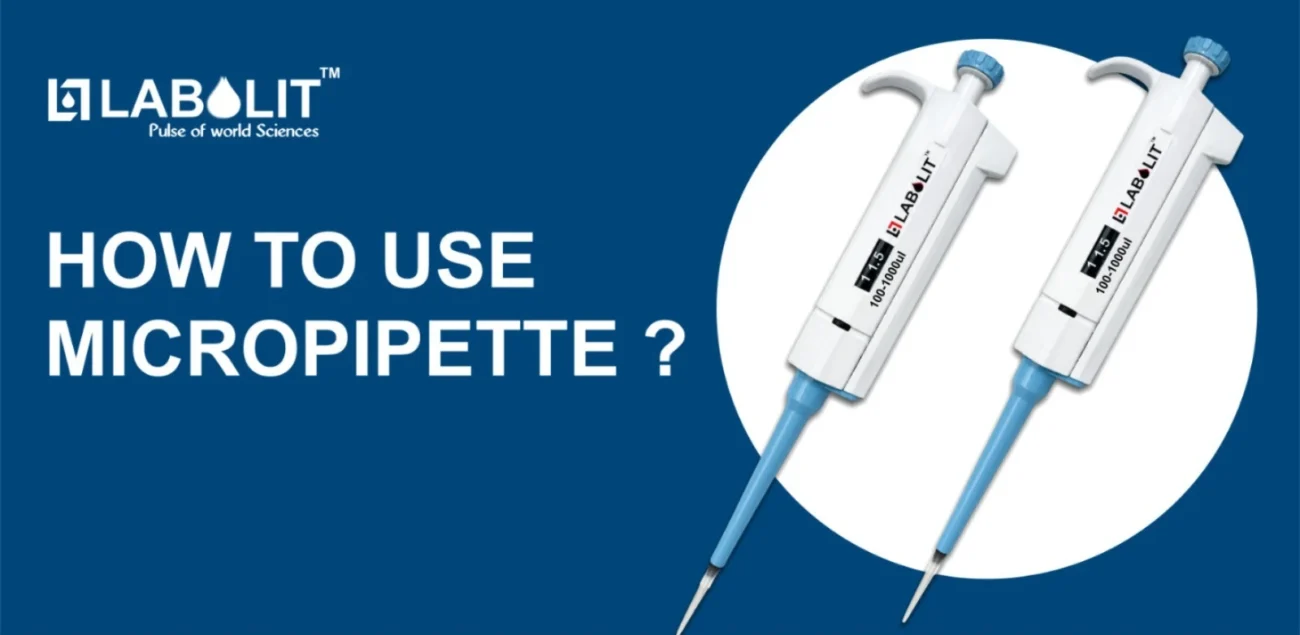
Micropipette prices vary according to volume range, type, channel configuration, accuracy, construction, features, manufacturer and warranty. Buyers should compare complete specifications rather than price alone.
Which micropipette is best for laboratory use?
The best micropipette depends on the application and required volume. A single-channel model is useful for individual samples, while multichannel models are useful for microplate workflows.
Is a single-channel micropipette cheaper than a multichannel micropipette?
In many cases, single-channel models have a lower purchase price than comparable multichannel models because multichannel instruments contain multiple liquid-transfer channels.
Does volume range affect micropipette price?
Yes. Different volume ranges require different precision mechanisms and components, so pricing can vary between models.
Are micropipette tips included with the micropipette?
This depends on the supplier, model and commercial package. Buyers should confirm the included accessories before placing an order.
How can I get a bulk micropipette price?
For bulk quantities, contact the manufacturer or supplier with the required models, volume ranges, quantity and delivery requirements to receive a quotation.
Is an expensive micropipette always better?
No. The correct micropipette is the one that matches the application’s volume, performance, ergonomics, tip compatibility and laboratory requirements.
Conclusion
Micropipette price should be evaluated together with performance, durability, accuracy, precision, volume range, channel configuration, tip compatibility, warranty and after-sales support.
For basic applications, a suitable single-channel model may be sufficient. For repetitive microplate workflows, a multichannel micropipette can improve productivity. For professional laboratories, long-term reliability and service support should be considered alongside the initial purchase price.
Sales & Orders: +91 7347707507 | +91 7379207507
Purchase: +91 7348107507
Complaint/Service: +91 7408107507
Email: sales.labolit@gmail.com
Website: labolit.com