Micropipette: Complete Guide to Types, Uses, Parts, Reading, Tips, Calibration & Price

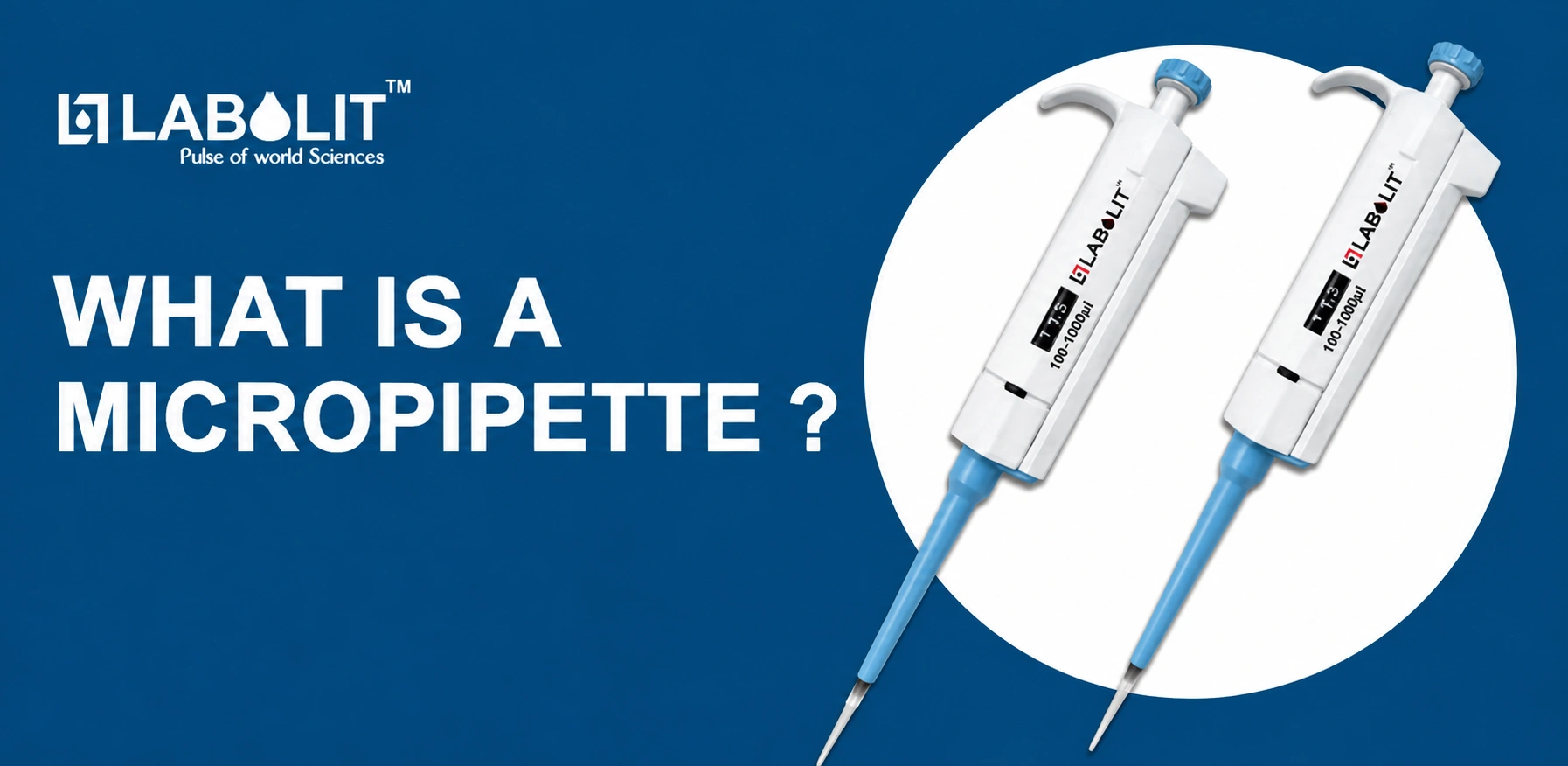
A micropipette is an essential laboratory instrument used for accurately measuring and transferring small volumes of liquids, generally in the microliter (µL) range. It is widely used in pharmaceutical laboratories, biotechnology, molecular biology, microbiology, diagnostic laboratories, hospitals, research institutions, universities and educational laboratories.
Accurate liquid handling is critical for experiments involving DNA, RNA, proteins, enzymes, reagents, samples and other laboratory solutions. A high-quality micropipette helps laboratory professionals achieve better accuracy, repeatability and consistency while reducing liquid wastage.
LABOLIT Private Limited provides laboratory liquid-handling solutions including single-channel micropipettes, multichannel micropipettes, micropipette tips, pipette stands and other laboratory instruments for research, diagnostic, pharmaceutical, biotechnology and educational applications.
What Is a Micropipette?
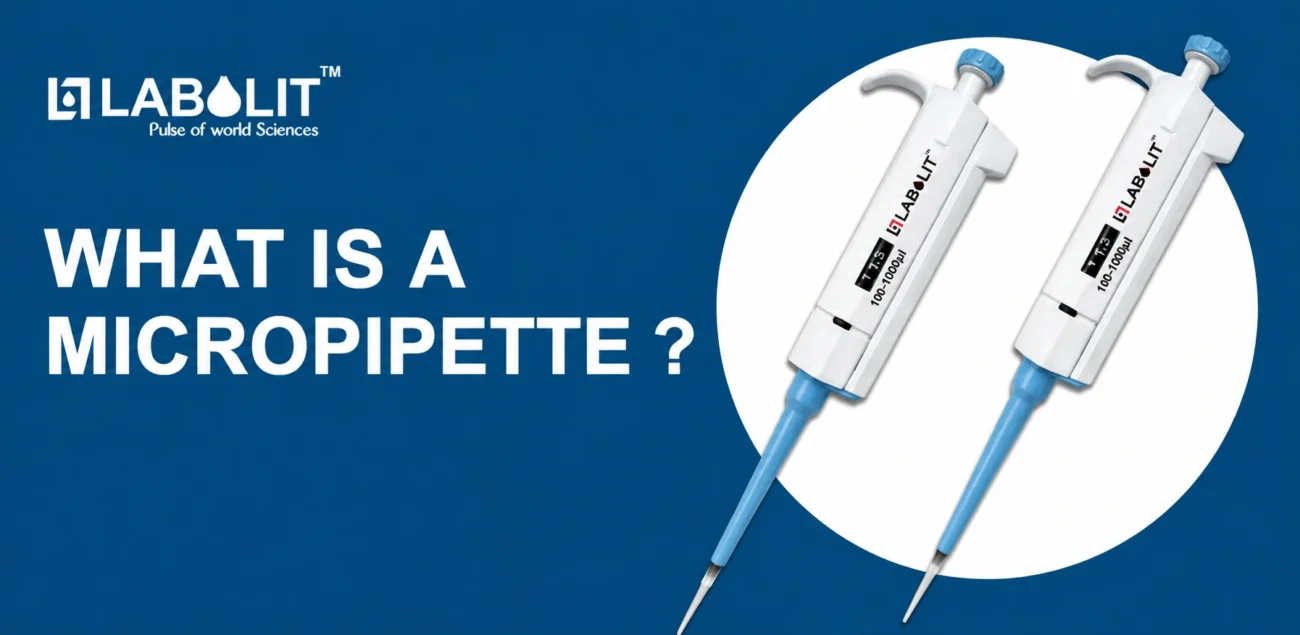
A micropipette is a precision laboratory device designed to aspirate and dispense a specific volume of liquid. Unlike conventional measuring cylinders or glass pipettes, micropipettes are particularly useful when very small volumes need to be handled accurately.
Most modern micropipettes work with disposable tips. The tip is attached to the lower end of the pipette, the required volume is selected, and the liquid is aspirated and dispensed using the plunger mechanism.
Depending on the model, a micropipette may be designed for fixed or variable volumes. Variable-volume micropipettes allow users to select different volumes within the specified operating range.
Common Micropipette Volume Ranges
Different laboratory applications require different volume capacities. Common ranges include:
- 0.1–2 µL
- 0.5–10 µL
- 2–20 µL
- 5–50 µL
- 10–100 µL
- 20–200 µL
- 100–1000 µL
- 1000–5000 µL
- Up to 10,000 µL for suitable liquid-handling applications
The appropriate micropipette should always be selected according to the required working volume and application.
Micropipette Types
Micropipettes are available in different configurations according to channel design, volume adjustment and application requirements.
Single Channel Micropipette

A single channel micropipette has one nozzle and one disposable tip. It is commonly used when individual samples or reagents need to be transferred one at a time.
Single-channel models are widely used in:
- Molecular biology
- Microbiology
- Biochemistry
- Clinical diagnostics
- Pharmaceutical laboratories
- Research laboratories
- Educational laboratories
- Routine sample preparation
They are available in multiple volume ranges to support different laboratory procedures.
Multichannel Micropipette

Multichannel micropipettes can improve laboratory productivity by reducing repetitive pipetting operations.
They are commonly used for:
- ELISA procedures
- Microplate preparation
- PCR workflows
- Cell culture applications
- Serial dilution
- High-throughput laboratory work
- Research and diagnostic testing
For laboratories processing multiple samples simultaneously, a multichannel micropipette can provide significant workflow advantages.
Micropipette Use: Where Is It Used?

The micropipette use is mainly associated with precise liquid transfer. It allows laboratory personnel to handle very small quantities of liquid with controlled dispensing.
Common applications include:
Pharmaceutical Laboratories
Micropipettes are used for sample preparation, reagent handling, formulation research and analytical laboratory procedures.
Biotechnology Laboratories
They are extensively used for molecular biology, genetic research, enzyme studies, DNA/RNA work and other biotechnology applications.
Diagnostic Laboratories
Micropipettes are used for transferring patient samples, reagents and test solutions during diagnostic procedures.
Research Laboratories
Researchers use micropipettes for controlled liquid transfer during experiments involving biological and chemical samples.
Educational Institutions
Micropipettes are also used in colleges, universities and laboratory training programs to teach accurate liquid handling techniques.
Micropipette Parts
Understanding micropipette parts helps users operate, maintain and troubleshoot the instrument correctly.
Typical micropipette components include:
- Plunger Button – Used to aspirate and dispense liquid.
- Volume Adjustment Mechanism – Used to set the desired volume in variable-volume models.
- Volume Display – Shows the selected pipetting volume.
- Tip Ejector – Allows the disposable tip to be removed after use.
- Tip Cone/Nozzle – Connects the micropipette with the disposable tip.
- Piston Mechanism – Controls the movement of air and liquid during pipetting.
- O-Ring and Seal Components – Help maintain proper sealing and performance.
- Handle/Body – Provides structural support and comfortable handling.
The exact construction can differ between micropipette models and manufacturers.
Micropipette Diagram and Drawing
A micropipette diagram can be useful for understanding the location and function of its major components. A typical diagram identifies the plunger, volume display, adjustment mechanism, tip ejector, shaft and tip cone.
Students and laboratory trainees often search for a micropipette drawing or labelled diagram when learning how a micropipette works.
A simplified representation of the major sections is:
Plunger → Volume Display → Adjustment Mechanism → Tip Ejector → Shaft → Tip Cone → Disposable Tip
Understanding these sections makes it easier to learn correct pipetting technique and routine maintenance.
How to Read a Micropipette?
Micropipette reading refers to correctly interpreting the volume displayed on the pipette.
The display format can vary depending on the model and volume range. Users should always check the manufacturer’s instructions before interpreting the digits.
For example, a variable-volume micropipette may have a digital volume window. The user adjusts the volume-setting mechanism until the required volume appears on the display.
Important Points for Micropipette Reading
- Confirm the pipette’s volume range.
- Never set a volume outside the specified range.
- Read all digits carefully.
- Confirm the unit being used, such as µL or mL.
- Check the selected volume before aspirating liquid.
- Avoid forcing the adjustment mechanism beyond its limits.
Correct volume reading is essential for reliable experimental results.
Micropipette Tips
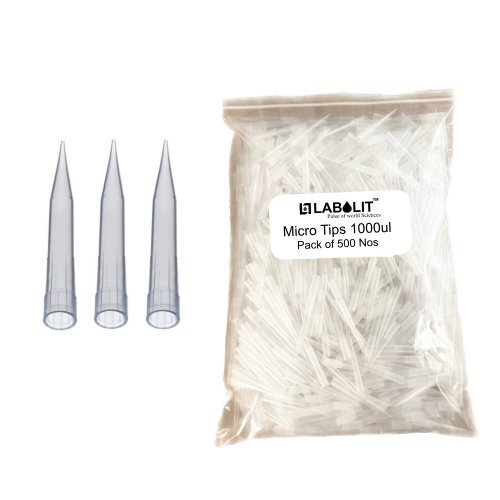
Micropipette tips are disposable accessories designed to hold and transfer the liquid. The tip is fitted onto the micropipette’s nozzle before aspiration.
Tips are available in different sizes and designs according to the micropipette model and application.
Important considerations when selecting tips include:
- Tip compatibility
- Volume capacity
- Material quality
- Fit and sealing
- Sterility requirements
- Application requirements
- Chemical compatibility
Using a properly fitting tip is important for accurate and consistent pipetting.
Micropipette Tip Box
A micropipette tip box is used to store and organize pipette tips before use. Tip boxes help protect tips from contamination and make them convenient to access during laboratory procedures.
For applications requiring sterile handling, users should select tips and storage systems appropriate for the required laboratory conditions.
Micropipette Calibration
Micropipette calibration is an important quality-control activity used to verify whether a pipette is delivering the intended volume within acceptable performance limits.
Regular calibration is especially important in laboratories where accurate liquid measurement directly affects test or research results.
Calibration may involve checking the pipette at selected volume points and comparing the actual delivered volume with the intended volume.
Why Is Micropipette Calibration Important?
Proper calibration helps:
- Maintain measurement accuracy
- Improve repeatability
- Identify performance deviations
- Support laboratory quality systems
- Reduce experimental errors
- Improve confidence in test results
Calibration frequency should be determined according to laboratory procedures, usage, risk assessment and applicable quality requirements.
How to Use a Micropipette Correctly?
Correct micropipette use involves more than simply pressing the plunger. Proper technique helps improve accuracy and reduce errors.
A general pipetting procedure is:
- Select a micropipette suitable for the required volume.
- Set the desired volume within the permitted range.
- Attach the correct micropipette tip securely.
- Press the plunger to the appropriate stop.
- Place the tip into the liquid at the correct depth.
- Slowly release the plunger to aspirate the liquid.
- Move the pipette to the receiving vessel.
- Press the plunger smoothly to dispense the liquid.
- Use the appropriate blow-out technique when required.
- Eject the disposable tip after completing the operation.
Users should follow the manufacturer’s operating instructions and laboratory SOPs for their specific pipette.
Micropipette Stand
A micropipette stand provides a safe and organized place to keep pipettes when they are not being used.
Using a suitable stand can help:
- Protect the pipette from accidental damage
- Keep the working area organized
- Reduce contamination risk
- Improve accessibility
- Prevent the pipette from being placed directly on laboratory surfaces
For laboratories using multiple pipettes, a multi-position stand can be particularly convenient.
Plastic Micropipette
A plastic micropipette may refer to micropipettes or pipetting components manufactured using suitable engineered polymer materials. Modern micropipette bodies can incorporate high-quality plastics for lightweight construction, ergonomic handling and chemical resistance, depending on the model.
The material selection should be evaluated according to:
- Durability
- Chemical compatibility
- Ergonomics
- Autoclavability requirements
- Temperature resistance
- Intended laboratory application
For reusable laboratory instruments, users should always check the manufacturer’s specifications regarding sterilization and autoclaving.
Micropipette Price
Micropipette price varies considerably depending on volume range, channel configuration, accuracy, construction, ergonomics, sterilization capability and other features.
A basic single-channel micropipette may cost less than an advanced multichannel or fully autoclavable model. Therefore, price alone should not be the only factor when selecting a laboratory pipette.
Before purchasing, laboratories should compare:
- Volume range
- Accuracy
- Precision
- Single or multichannel configuration
- Fixed or variable volume
- Autoclavability
- Warranty
- Tip compatibility
- Calibration support
- Service availability
- Intended application
For bulk, dealer, OEM, private-label and institutional requirements, pricing may also depend on order quantity and product configuration.
How to Choose the Right Micropipette?
Selecting the right micropipette depends primarily on the volume and application.
For Routine Laboratory Work
A single-channel variable-volume micropipette can be a practical choice when different volumes need to be handled.
For Microplate Applications
An 8-channel or 12-channel multichannel micropipette may improve productivity.
For Small Volumes
Choose a micropipette specifically designed for low-volume applications and use compatible tips.
For Sterile Work
Consider a model and accessories suitable for the laboratory’s sterilization and contamination-control requirements.
For High-Volume Liquid Handling
For volumes in the milliliter range, select a pipette specifically designed and rated for those volumes rather than exceeding the range of a smaller micropipette.
Micropipette Manufacturers and Suppliers
Choosing reliable micropipette manufacturers is important when purchasing laboratory liquid-handling equipment.
A good manufacturer or supplier should provide clear product specifications, volume ranges, operating instructions, quality documentation, warranty terms and after-sales support.
LABOLIT Private Limited offers laboratory liquid-handling solutions for pharmaceutical, biotechnology, diagnostic, research, healthcare and educational applications.
LABOLIT’s micropipette range includes different configurations designed for routine laboratory liquid handling, including single-channel and multichannel options.
The company also supports requirements for bulk supply, dealer supply, OEM/private-label opportunities and export markets, subject to product and commercial requirements.
Micropipette Maintenance and Care
Proper maintenance can help extend the useful life of a reusable micropipette.
Recommended practices include:
- Keep the micropipette clean and dry.
- Use compatible tips.
- Do not exceed the specified volume range.
- Avoid dropping the instrument.
- Store it properly on a micropipette stand.
- Follow the manufacturer’s cleaning instructions.
- Inspect seals and moving components periodically.
- Calibrate according to laboratory requirements.
- Follow the manufacturer’s instructions for sterilization or autoclaving.
Never disassemble a precision pipette unnecessarily. Servicing should be performed according to the manufacturer’s procedures.
Why Accuracy Matters in Micropipetting
Even a small liquid-volume error can influence experimental results when working with concentrated reagents or small samples.
Accurate pipetting contributes to:
- Better repeatability
- Reliable test results
- Consistent sample preparation
- Reduced reagent wastage
- Improved laboratory productivity
- Greater confidence in experimental data
For this reason, proper pipette selection, technique, compatible tips and regular performance verification are all important.
LABOLIT Micropipette Solutions
LABOLIT Private Limited provides micropipette and laboratory liquid-handling solutions for laboratories across India and international markets.
The product portfolio includes:
- Single-channel micropipettes
- Multichannel micropipettes
- Fixed-volume micropipettes
- Variable-volume micropipettes
- Micropipette tips
- Micropipette stands
- Other laboratory liquid-handling products
LABOLIT focuses on providing practical laboratory solutions for pharmaceutical companies, biotechnology organizations, diagnostic laboratories, hospitals, research institutions, educational organizations, dealers and distributors.
For bulk requirements, OEM/private-label opportunities or export enquiries, customers can contact the LABOLIT sales team.
Frequently Asked Questions About Micropipettes
What is a micropipette?
A micropipette is a laboratory instrument used to accurately measure and transfer small volumes of liquid, commonly in microliters.
What is a micropipette used for?
It is used for precise liquid transfer in biotechnology, pharmaceutical, diagnostic, microbiology, molecular biology, research and educational laboratories.
What is the difference between a single-channel and multichannel micropipette?
A single-channel micropipette transfers liquid through one tip at a time, while a multichannel micropipette can transfer liquid through multiple tips simultaneously.
What are micropipette tips?
Micropipette tips are disposable components attached to the pipette nozzle to aspirate and dispense liquid.
Why is micropipette calibration important?
Calibration verifies pipette performance and helps ensure that the delivered volume is close to the intended volume.
How much does a micropipette cost?
The micropipette price depends on volume range, configuration, quality, features, channel number, sterilization capability and manufacturer.
What is a micropipette stand?
A micropipette stand is a storage accessory designed to hold pipettes safely when they are not being used.
How do I select a micropipette?
Select a pipette according to the required volume range, application, accuracy requirements, channel configuration, tip compatibility and laboratory operating conditions.
Conclusion
A micropipette is one of the most important precision liquid-handling instruments used in modern laboratories. From routine sample preparation to advanced biotechnology and diagnostic workflows, the right micropipette can improve accuracy, consistency and laboratory efficiency.
Understanding micropipette use, micropipette parts, micropipette reading, micropipette tips, micropipette calibration, micropipette price, single-channel and multichannel micropipettes helps laboratory users make better purchasing and operational decisions.
For reliable laboratory liquid-handling solutions, LABOLIT Private Limited provides a range of micropipettes, tips, stands and related laboratory products for Indian and international customers.
For Sales & Orders: +91 7347707507 | +91 7379207507
Purchase: +91 7348107507
Complaints/Service: +91 7408107507
Email: sales.labolit@gmail.com | sales.umascientific@gmail.com
Website: labolit.com
micropipette use, micropipette price, micropipette diagram, micropipette tips, multichannel micropipette, micropipette calibration, micropipette stand, single channel micropipette, micropipette drawing, micropipette manufacturers, micropipette reading, micropipette tip box, plastic micropipette, micropipette parts