Pipette vs Pipetter: Complete Guide to Micropipette Manufacturer, Supplier & Exporter

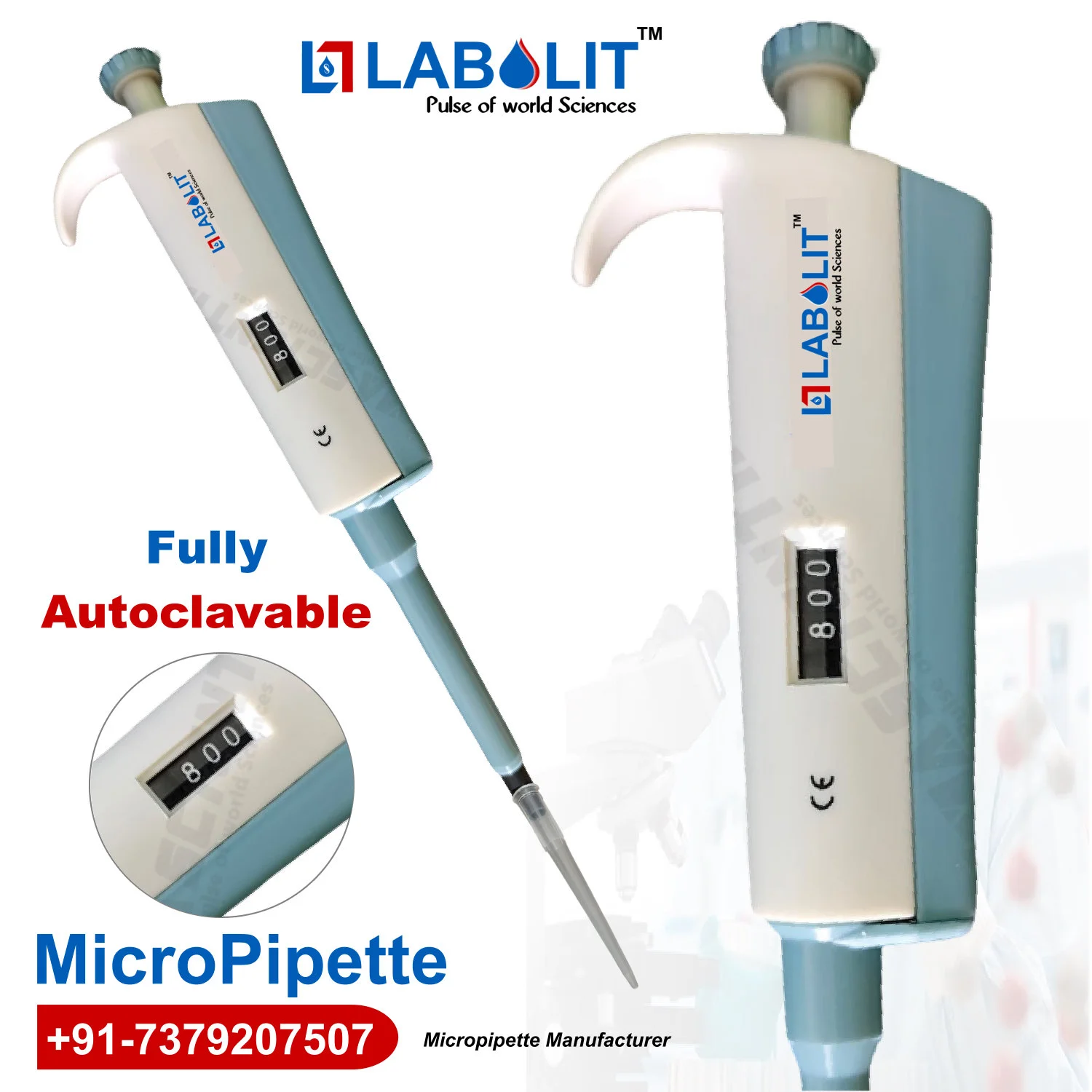
Pipette vs Pipetter | Micropipette Manufacturer Supplier Exporter
Learn the difference between pipette and pipetter with complete information about micropipette types, uses, handling, calibration, and LABOLIT micropipette manufacturer solutions.
Focus Keyword: Pipette vs Pipetter
Secondary Keywords: Micropipette manufacturer, micropipette supplier, micropipette exporter, laboratory pipette, adjustable micropipette, fixed micropipette, buy micropipette online, laboratory equipment manufacturer India
Pipettes and pipetters are among the most essential laboratory instruments used in scientific research, diagnostics, pharmaceuticals, biotechnology, pathology, chemistry, microbiology, and industrial testing laboratories. These instruments are designed for accurate liquid handling, helping laboratories transfer very small quantities of liquids with precision and repeatability.
Many laboratory users often get confused between the terms “pipette” and “pipetter.” Although both are related to liquid handling, there are significant differences in functionality, applications, and technology.
In modern laboratories, precision liquid transfer is critical because even the smallest measurement error can affect the final experimental result. This is why advanced micropipettes and pipetting systems have become indispensable for laboratories worldwide.
This in-depth guide explains the complete difference between pipette and pipetter, their types, applications, working principles, advantages, calibration methods, maintenance requirements, and how to choose the best micropipette manufacturer, supplier, and exporter.
LABOLIT is one of the trusted laboratory equipment brands offering high-quality micropipettes designed for research laboratories, pharmaceutical industries, biotechnology centers, educational institutions, diagnostic laboratories, and industrial applications.
What is a Pipette?
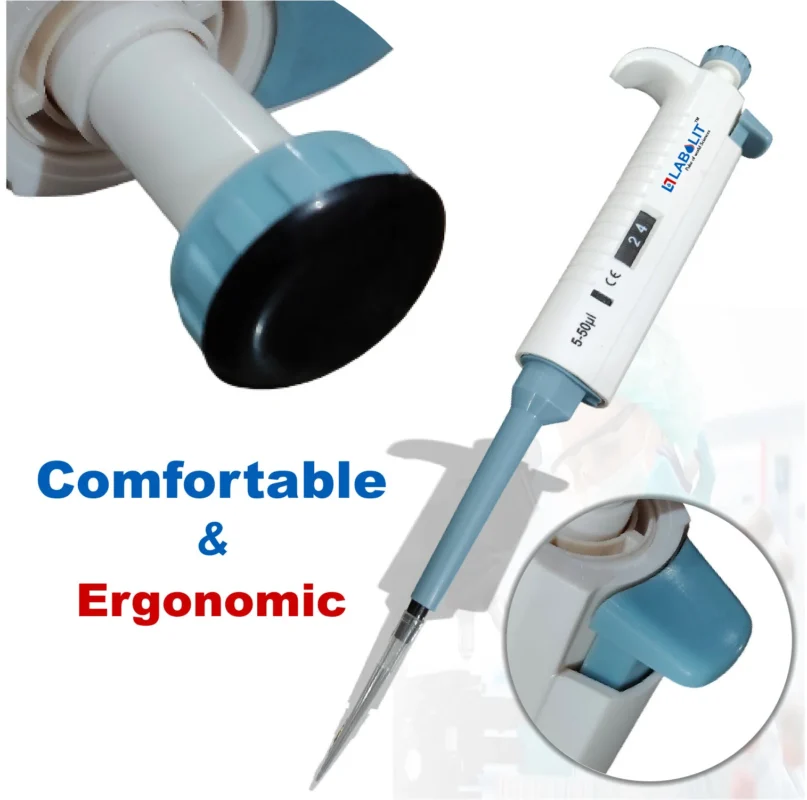
A pipette is a laboratory instrument used for measuring, transferring, and dispensing liquid volumes from one container to another. Traditional pipettes are commonly made of glass or plastic and are used for both macro and micro liquid handling applications.
Pipettes are widely used in:
- Chemistry laboratories
- Microbiology laboratories
- Educational laboratories
- Research centers
- Pharmaceutical industries
- Medical laboratories
- Food testing laboratories
- Biotechnology laboratories
The primary purpose of a pipette is to ensure accurate liquid transfer while minimizing contamination and measurement errors.
Types of Pipettes
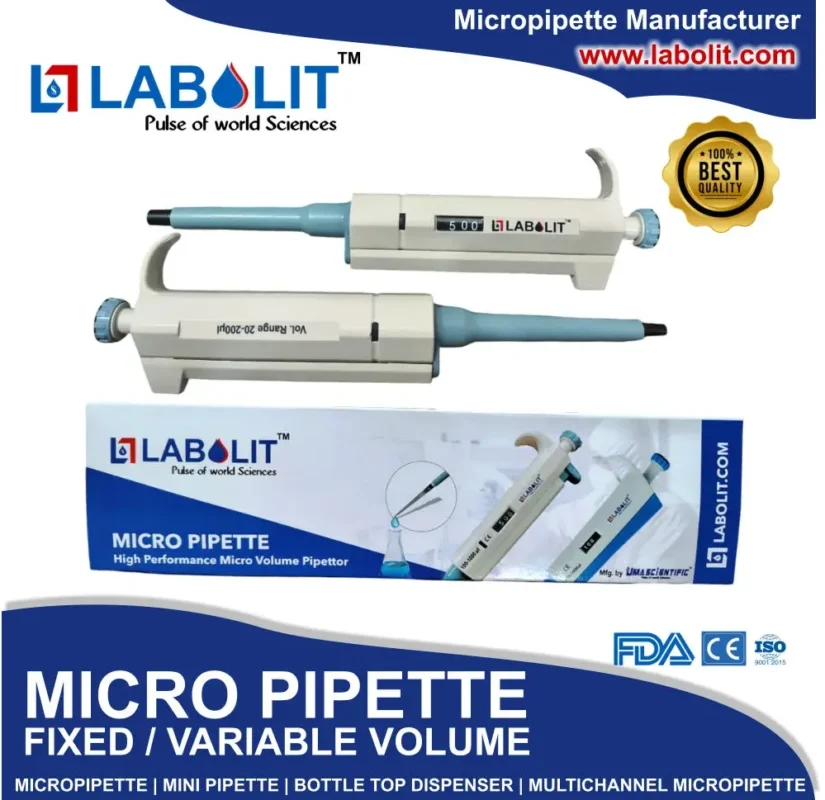
Different types of pipettes are available depending on laboratory requirements.
Glass Pipettes
Glass pipettes are traditional laboratory pipettes commonly used for transferring liquids manually.
Volumetric Pipettes
Volumetric pipettes are designed for highly accurate measurement of fixed liquid volumes.
Graduated Pipettes
Graduated pipettes contain volume markings for dispensing variable liquid amounts.
Pasteur Pipettes
Pasteur pipettes are commonly used for transferring small liquid quantities without high accuracy requirements.
What is a Pipetter?
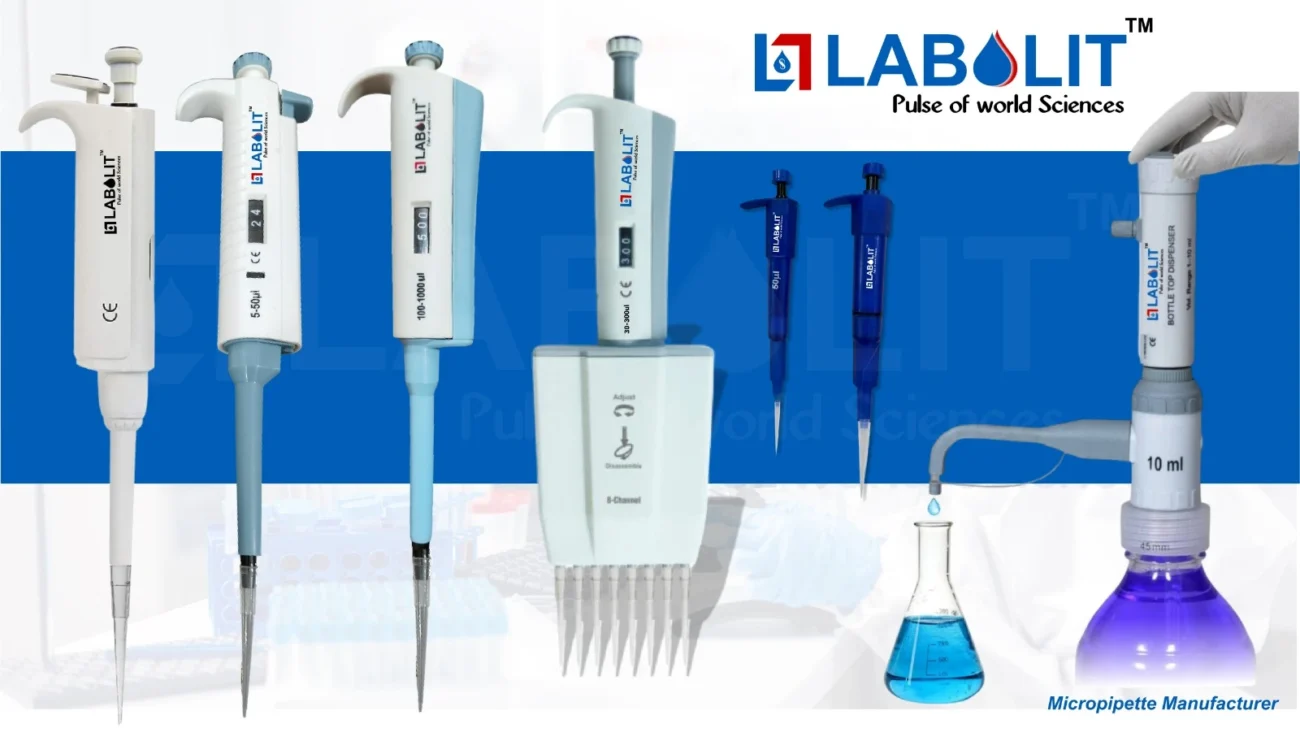
A pipetter is an advanced liquid handling instrument used for precise aspiration and dispensing of micro liquid volumes. In modern laboratories, the term “pipetter” usually refers to mechanical or electronic micropipettes.
Pipetters are specially designed for:
- High precision liquid handling
- Repetitive dispensing
- Research applications
- PCR preparation
- Diagnostic testing
- Pharmaceutical analysis
- Biotechnology experiments
Unlike traditional pipettes, pipetters offer improved ergonomics, better precision, adjustable volume control, and reduced human error.
Main Features of Pipetters
Modern pipetters include advanced features such as:
Adjustable Volume Control
Allows users to select required liquid volumes.
Ergonomic Design
Reduces hand fatigue during repetitive laboratory work.
High Accuracy
Provides reliable and repeatable liquid dispensing.
Disposable Tip System
Improves hygiene and reduces contamination.
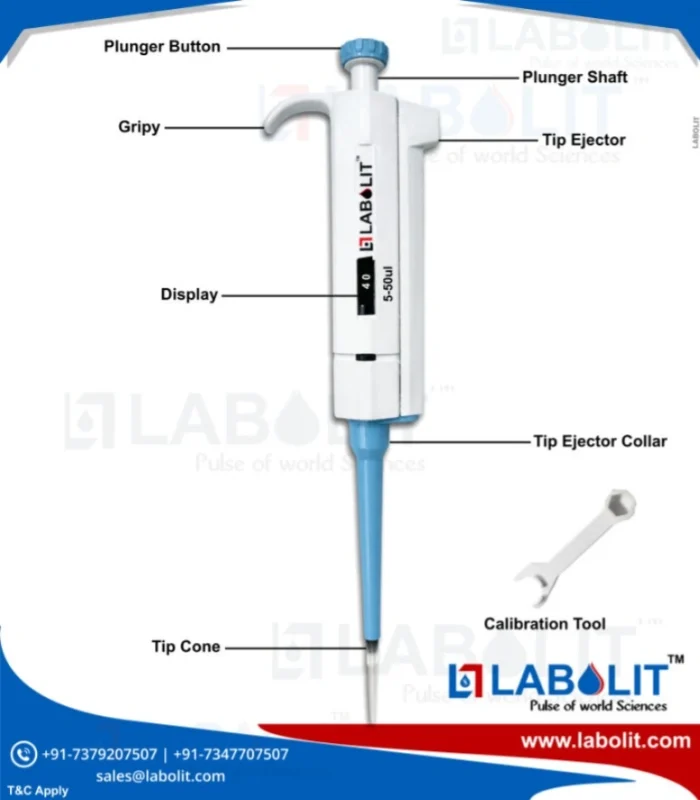
Calibration Mechanism
Ensures long-term precision and compliance.
Pipette vs Pipetter: Major Differences
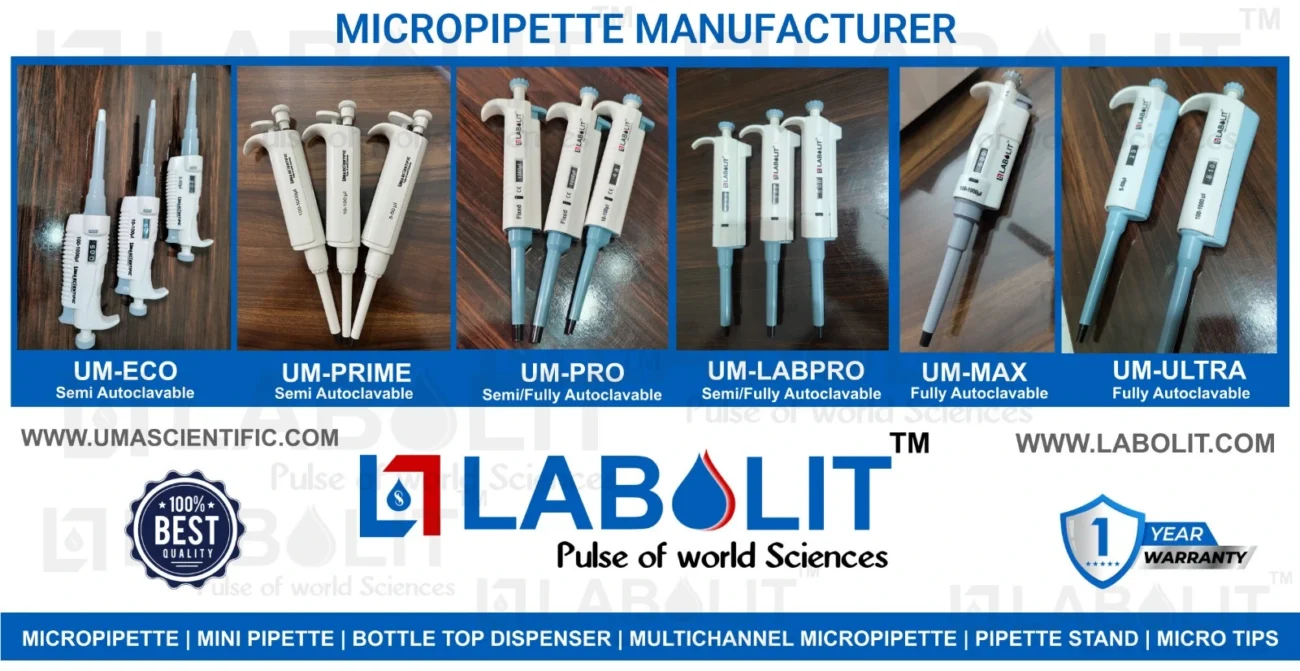
Understanding the difference between pipette and pipetter is important for selecting the correct laboratory instrument.
| Feature | Pipette | Pipetter |
|---|---|---|
| Operation | Manual | Mechanical/Electronic |
| Accuracy | Moderate | Very High |
| Volume Control | Limited | Adjustable |
| Application | Basic transfer | Precision liquid handling |
| Usage | General labs | Research and diagnostics |
| Design | Glass/Plastic | Advanced ergonomic design |
| Contamination Control | Lower | Better with disposable tips |
| Productivity | Moderate | High |
Accuracy Difference
Traditional pipettes may provide moderate accuracy, whereas pipetters are specifically designed for highly precise liquid handling.
Ease of Use
Modern pipetters are more user-friendly and reduce repetitive strain during continuous laboratory operations.
Laboratory Applications
Pipetters are preferred in advanced molecular biology, pharmaceutical, and diagnostic laboratories.
What is a Micropipette?

A micropipette is a precision laboratory instrument used to measure and transfer extremely small volumes of liquids, generally ranging from 0.1 µL to 10000 µL.
Micropipettes are among the most commonly used pipetters in modern laboratories.
These instruments operate using an air displacement mechanism that aspirates and dispenses liquids accurately using disposable pipette tips.
Micropipettes are essential in:
- PCR laboratories
- Molecular biology
- Biotechnology research
- Pharmaceutical testing
- Pathology laboratories
- DNA and RNA analysis
- Clinical diagnostics
- Chemical laboratories
Working Principle of Micropipette
Micropipettes work using piston and air displacement technology.
Aspiration Process
When the plunger is released, vacuum pressure draws liquid into the tip.
Dispensing Process
Pressing the plunger dispenses the selected liquid volume.
Air Displacement System
The internal piston creates controlled air pressure for accurate liquid transfer.
Types of Micropipettes

Micropipettes are available in various designs depending on laboratory applications.
Fixed Volume Micropipette
Fixed micropipettes dispense a single pre-set liquid volume.
Advantages of Fixed Micropipettes
- High repeatability
- Reduced adjustment errors
- Easy operation
- Suitable for routine testing
Applications of Fixed Micropipettes
- Diagnostic laboratories
- Quality control laboratories
- Educational institutes
Variable Volume Micropipette
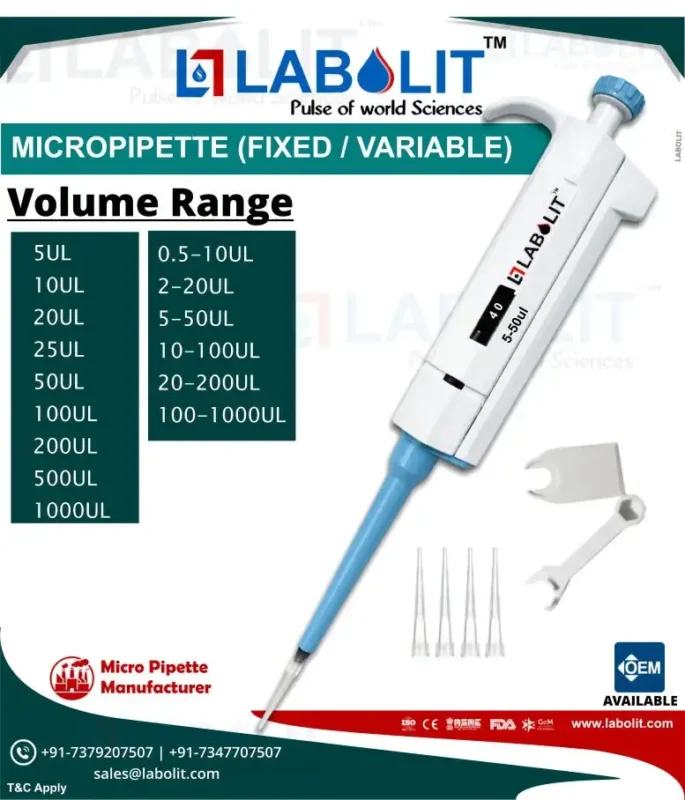
Variable micropipettes allow users to adjust liquid volume within a specified range.
Common Volume Ranges
- 0.1–2 µL
- 0.5–10 µL
- 2–20 µL
- 10–100 µL
- 20–200 µL
- 100–1000 µL
Advantages of Variable Micropipettes
- Flexible operation
- Multiple application support
- Cost-effective laboratory solution
Applications of Variable Micropipettes
- Molecular biology
- Pharmaceutical analysis
- Biotechnology research
Single Channel Micropipette
Single channel micropipettes transfer liquid using one tip at a time.
Benefits of Single Channel Models
- Better control
- High precision
- Easy maintenance
Common Laboratory Uses
- Sample preparation
- Clinical testing
- Chemical analysis
Multi Channel Micropipette
Multi channel micropipettes contain multiple channels for simultaneous liquid dispensing.
Benefits of Multi Channel Models
- Faster sample processing
- Increased productivity
- Time-saving operation
Common Applications
- ELISA testing
- PCR plate filling
- High-throughput screening
Applications of Pipettes and Pipetters

Pipettes and pipetters are used across multiple industries and laboratory environments.
Pharmaceutical Industries
Used for formulation development, chemical analysis, and quality control.
Biotechnology Laboratories
Used for DNA extraction, PCR preparation, and molecular biology research.
Diagnostic Laboratories
Used for blood testing, pathology analysis, and sample preparation.
Educational Institutions
Used for practical training and laboratory experiments.
Food Testing Laboratories
Used for contamination analysis and quality assurance.
Research Laboratories
Used for scientific experiments requiring accurate liquid handling.
How to Use a Micropipette Correctly
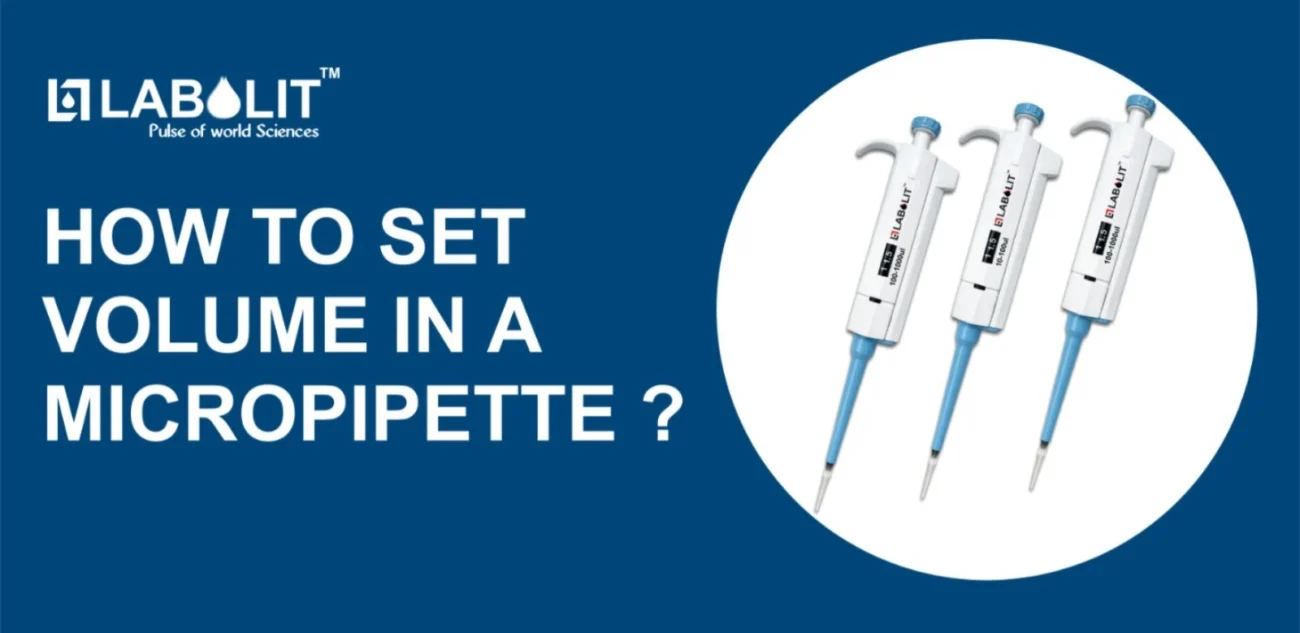
Proper handling improves micropipette performance and accuracy.
Select Correct Volume Range
Always use a micropipette suitable for the required liquid volume.
Attach Pipette Tip Properly
Use compatible high-quality tips for accurate dispensing.
Hold Vertically During Aspiration
Maintaining vertical position improves liquid accuracy.
Release Plunger Slowly
Fast release can create air bubbles and inaccurate measurements.
Dispense Smoothly
Press plunger gently to ensure complete liquid transfer.
Common Micropipetting Errors
Incorrect handling can reduce laboratory accuracy.
Using Incorrect Volume Settings
Using volumes outside the specified range affects precision.
Poor Quality Tips
Low-quality tips may leak or fit improperly.
Rapid Plunger Movement
Fast aspiration and dispensing create inconsistencies.
Lack of Calibration
Uncalibrated micropipettes provide inaccurate results.
Micropipette Calibration and Maintenance
Regular calibration is necessary for maintaining accuracy and compliance.
Importance of Calibration
Calibration ensures reliable liquid dispensing performance.
Recommended Calibration Frequency
Micropipettes should generally be calibrated every 3 to 6 months.
Maintenance Procedures
- Clean the exterior regularly
- Inspect tip cones
- Lubricate internal components
- Replace damaged seals
- Store properly on pipette stands
Proper Storage
Always store micropipettes vertically in clean and dry environments.
How to Choose the Best Micropipette Manufacturer
Selecting the right manufacturer is essential for laboratory performance and reliability.
Product Quality
Choose manufacturers offering precision-tested laboratory instruments.
Calibration Support
Reliable calibration services improve long-term accuracy.
Wide Product Range
A trusted supplier should provide multiple volume ranges and models.
Ergonomic Design
Comfortable instruments reduce user fatigue.
After-Sales Support
Technical support and spare availability are important.
Global Export Capability
Reliable exporters ensure international quality standards.
Why Laboratories Choose LABOLIT Micropipettes
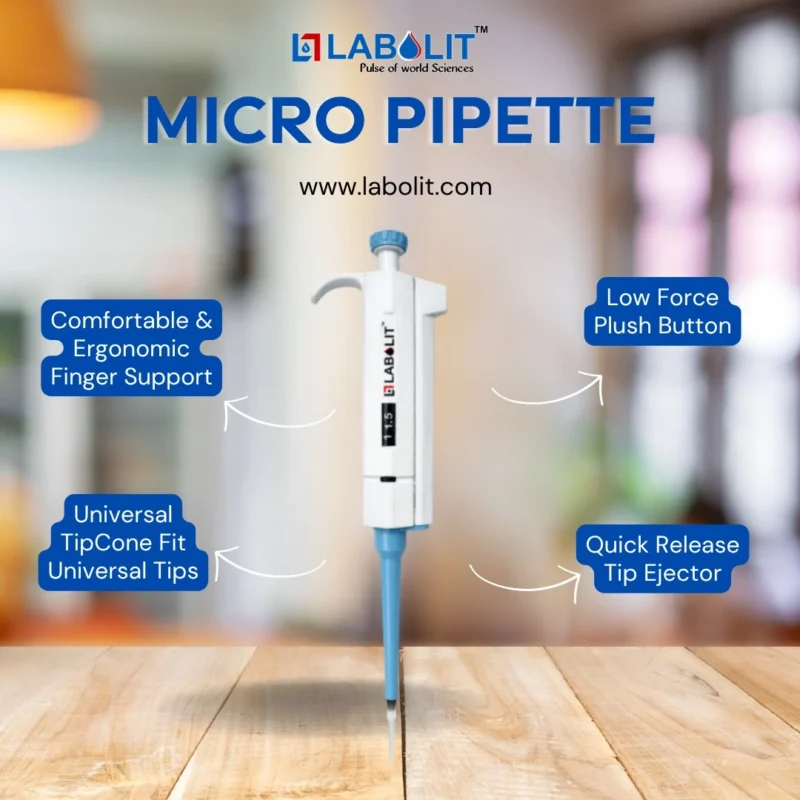
LABOLIT is a trusted micropipette manufacturer, supplier, and exporter offering high-quality laboratory liquid handling solutions for research, diagnostics, pharmaceutical industries, biotechnology laboratories, educational institutions, and industrial applications.
LABOLIT micropipettes are designed for precision, durability, ergonomic comfort, and long-term laboratory performance.
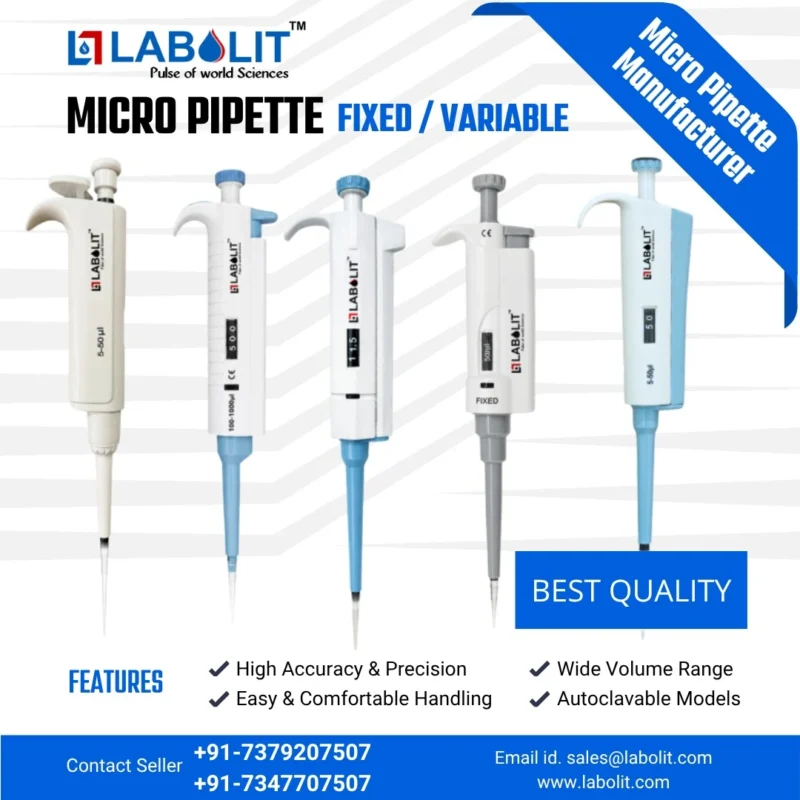
Features of LABOLIT Micropipettes
- High accuracy and repeatability
- Adjustable and fixed volume models
- Ergonomic lightweight design
- Smooth plunger movement
- Durable construction
- Easy calibration
- Wide volume ranges available
- Suitable for research and diagnostics
- Competitive pricing
- Reliable laboratory performance
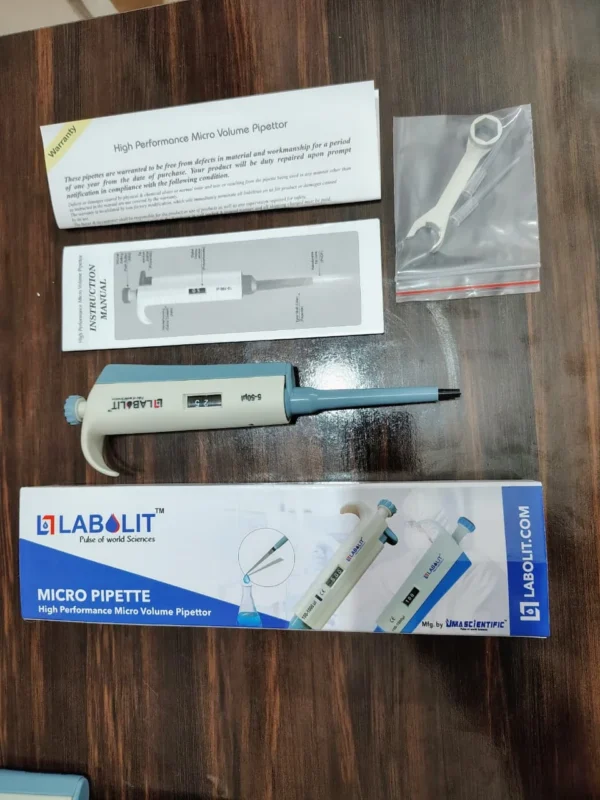
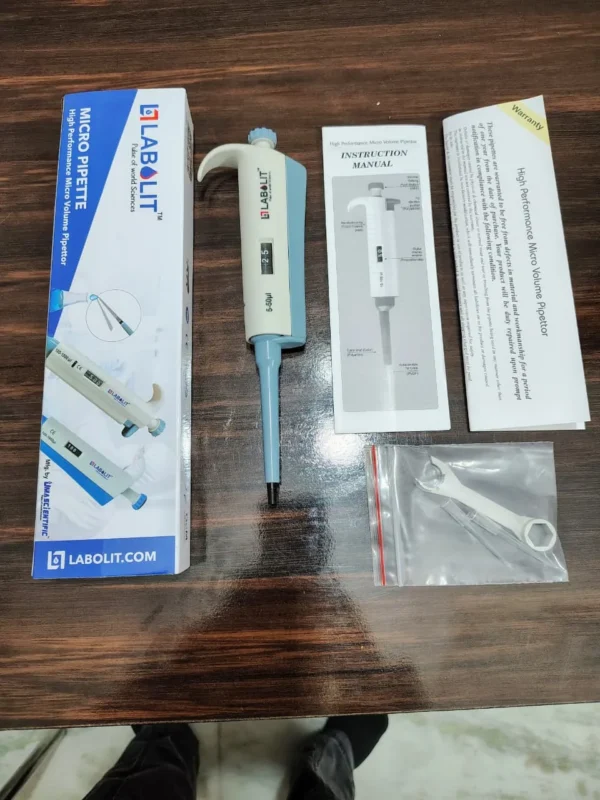
Available LABOLIT Models
- Single Channel Micropipettes
- Multi Channel Micropipettes
- Fixed Volume Micropipettes
- Variable Volume Micropipettes
- Mechanical Micropipettes
- Laboratory Liquid Handling Instruments
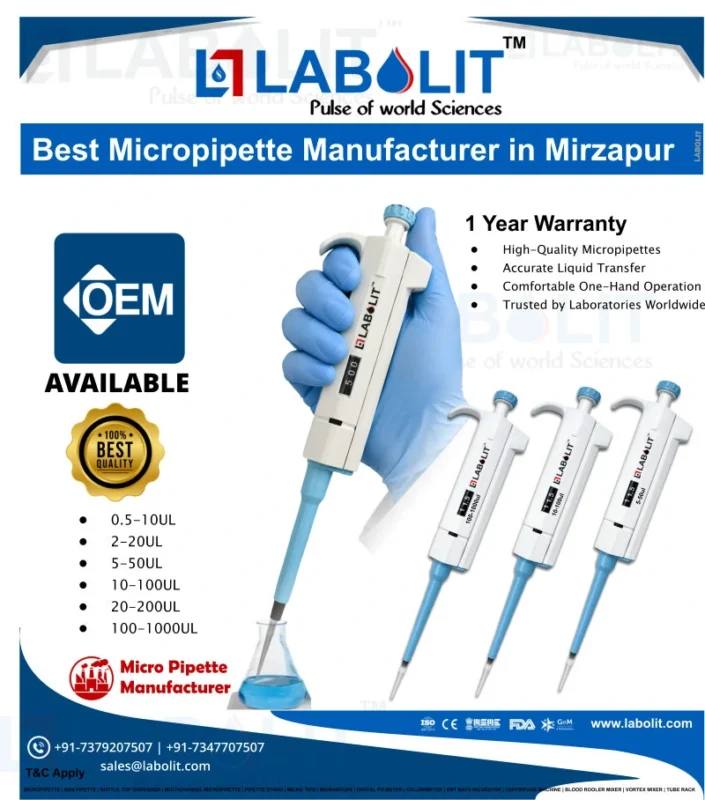
Available Volume Ranges
- 0.1–2 µL
- 0.5–10 µL
- 2–20 µL
- 10–100 µL
- 20–200 µL
- 100–1000 µL
- 1000–5000 µL
- 5000–10000 µL
Benefits of Using High-Quality Micropipettes
Using premium-quality micropipettes improves laboratory efficiency and accuracy.
Better Accuracy
Ensures precise and repeatable liquid measurements.
Reduced Contamination
Disposable tips minimize sample contamination risks.
Improved Productivity
Faster and smoother operation increases laboratory output.
Enhanced User Comfort
Ergonomic design reduces repetitive strain injuries.
Long Instrument Life
Durable construction improves long-term reliability.
Future of Laboratory Pipetting Technology
Modern laboratories are moving toward automated liquid handling systems and smart pipetting technologies.
Future advancements may include:
- Digital calibration systems
- Electronic dispensing control
- Bluetooth-enabled micropipettes
- AI-based monitoring
- Fully automated liquid handling workstations
These technologies will further improve laboratory precision, efficiency, and data reliability.
Conclusion
Understanding the difference between pipette and pipetter is essential for selecting the correct laboratory liquid handling instrument. While traditional pipettes are suitable for general liquid transfer applications, modern pipetters and micropipettes provide significantly higher precision, accuracy, ergonomics, and productivity.
Micropipettes have become indispensable tools for pharmaceutical industries, biotechnology laboratories, research centers, educational institutes, pathology laboratories, and diagnostic facilities.
Selecting a trusted micropipette manufacturer, supplier, and exporter ensures long-term laboratory performance, accurate results, and reliable operation.
LABOLIT offers premium-quality micropipettes designed for professional laboratory applications with advanced precision, ergonomic comfort, durable construction, and dependable performance.
Whether you need fixed volume micropipettes, adjustable micropipettes, single channel models, or multi channel laboratory pipetting solutions, LABOLIT provides reliable instruments for modern laboratories.
Contact LABOLIT
Sales: +91 7347707507, +91 7379207507
Purchase: +91 7348107507
Complaint: +91 7408107507
Email: sales.labolit@gmail.com
Email: sales.umascientific@gmail.com
Website: www.labolit.com
SEO Keywords
pipette vs pipetter, micropipette manufacturer, micropipette supplier, micropipette exporter, laboratory pipette, adjustable micropipette, fixed micropipette, variable volume micropipette, buy micropipette online, single channel micropipette, multi channel micropipette, laboratory equipment manufacturer India, pipette handling guide, micropipette calibration, laboratory liquid handling equipment, PCR micropipette, biotechnology laboratory equipment, pharmaceutical laboratory instruments, research laboratory micropipette, LABOLIT micropipette