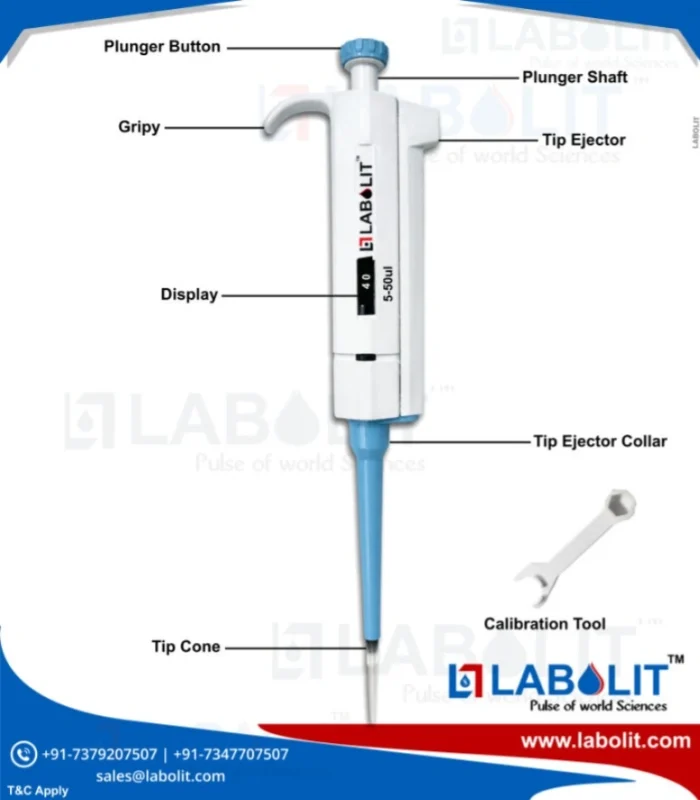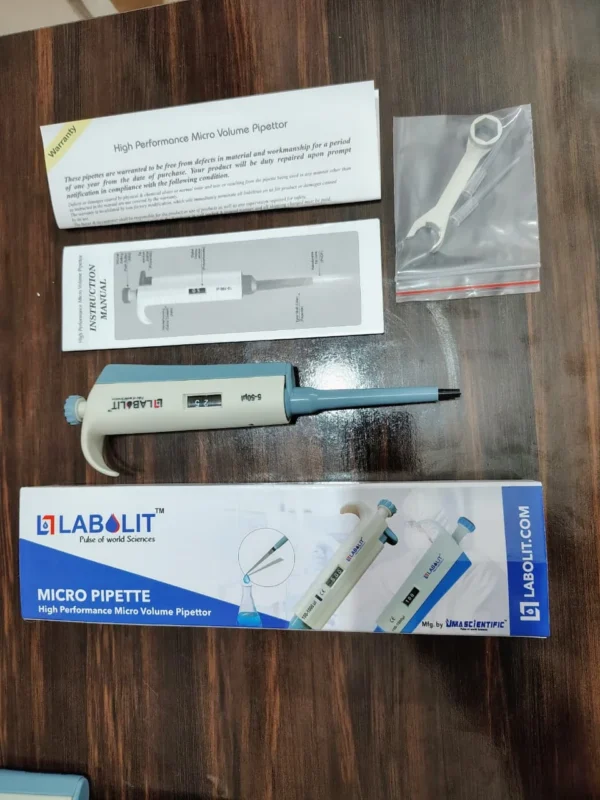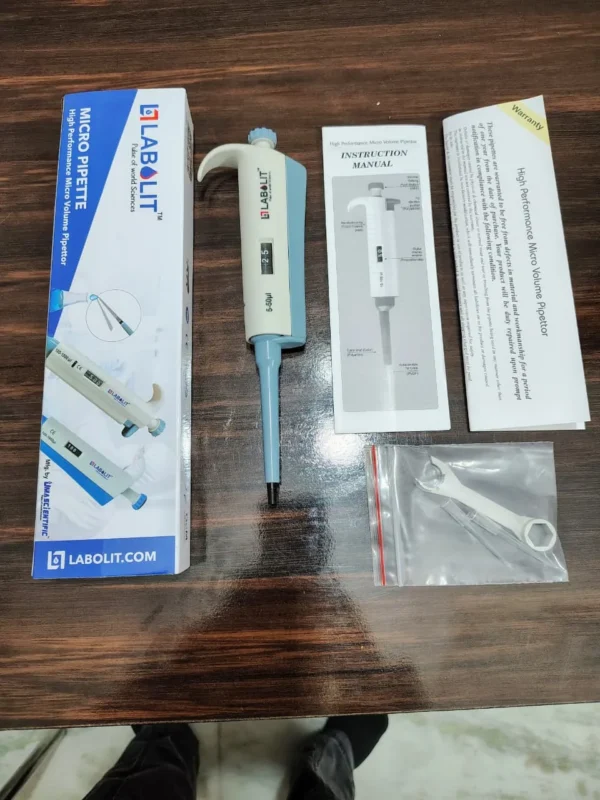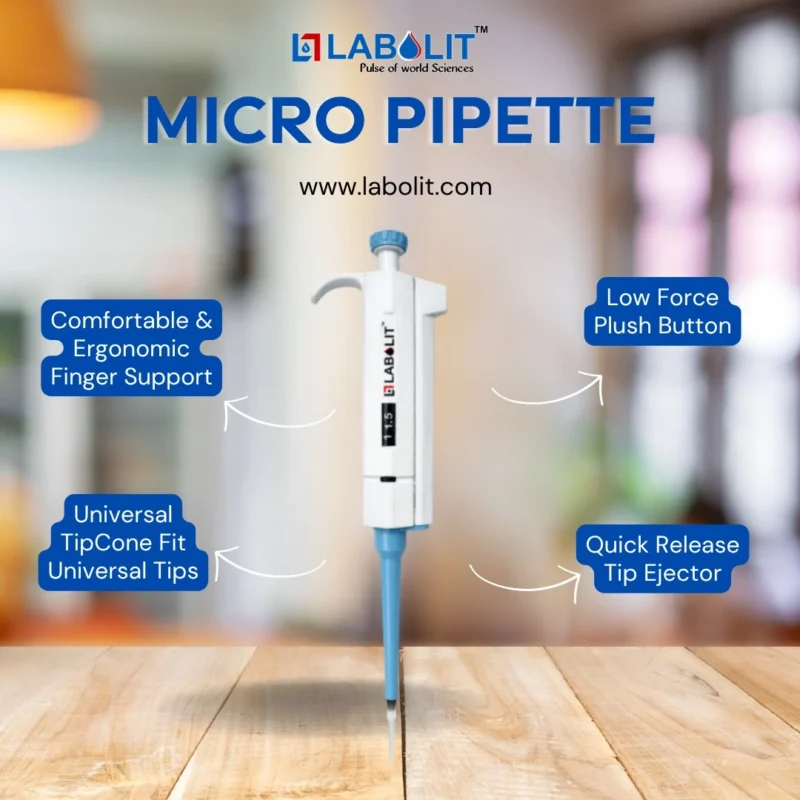
What is a Micropipette? Uses, How to Use, Principle, Differences & More

Micropipettes are essential precision instruments in every modern laboratory. They allow scientists, researchers, and technicians to accurately measure and transfer very small volumes of liquids — from as little as 0.2 μL up to 10 mL. Whether you’re in molecular biology, biochemistry, microbiology, clinical diagnostics, or pharmaceutical research, a reliable micropipette ensures reproducible results and minimizes errors.
Labolit offers the best micropipettes in fixed and variable volume models, covering 0.2 μL – 10 mL volumes, trusted across India and globally.
What is a Micropipette Used For?
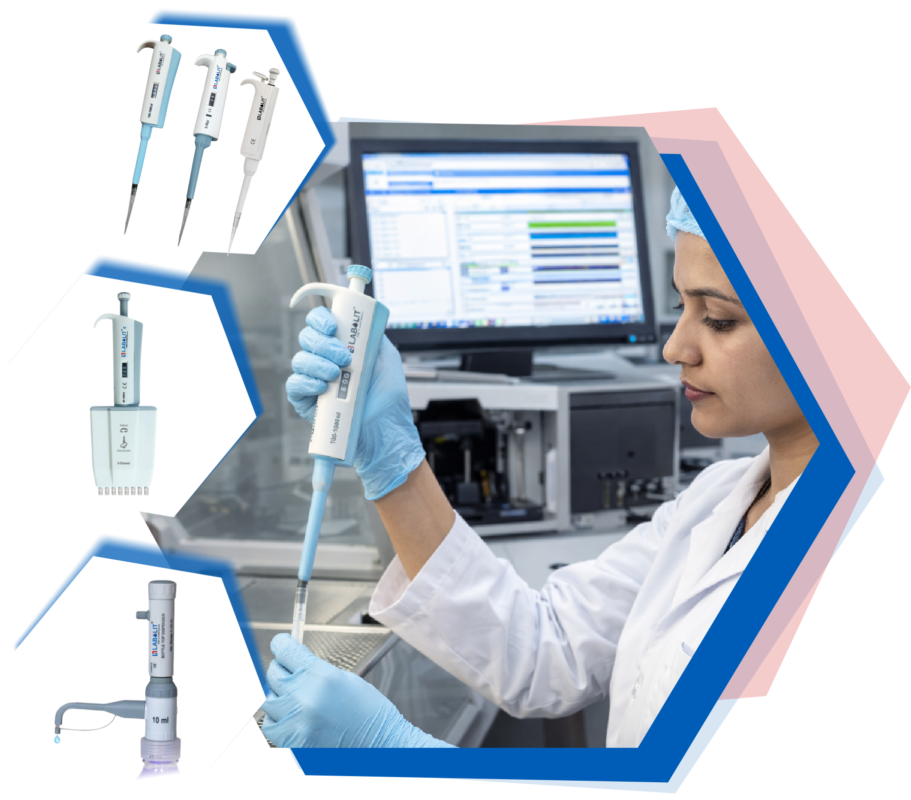
Micropipettes are used for precise liquid handling in experiments where even tiny inaccuracies can affect outcomes. Key applications include:
- Preparing PCR, qPCR, and DNA/RNA sequencing reactions
- Dispensing reagents, enzymes, or samples in assays
- Cell culture work, media preparation, and dilutions
- Protein purification, ELISA, and antibody handling
- Clinical sample processing and diagnostic testing
- Drug formulation and high-throughput screening
Using disposable tips prevents cross-contamination, making micropipettes ideal for sensitive biological work.
How to Use a Micropipette (Step-by-Step Guide)
Proper technique is crucial for accuracy and to avoid damaging the instrument or contaminating samples.
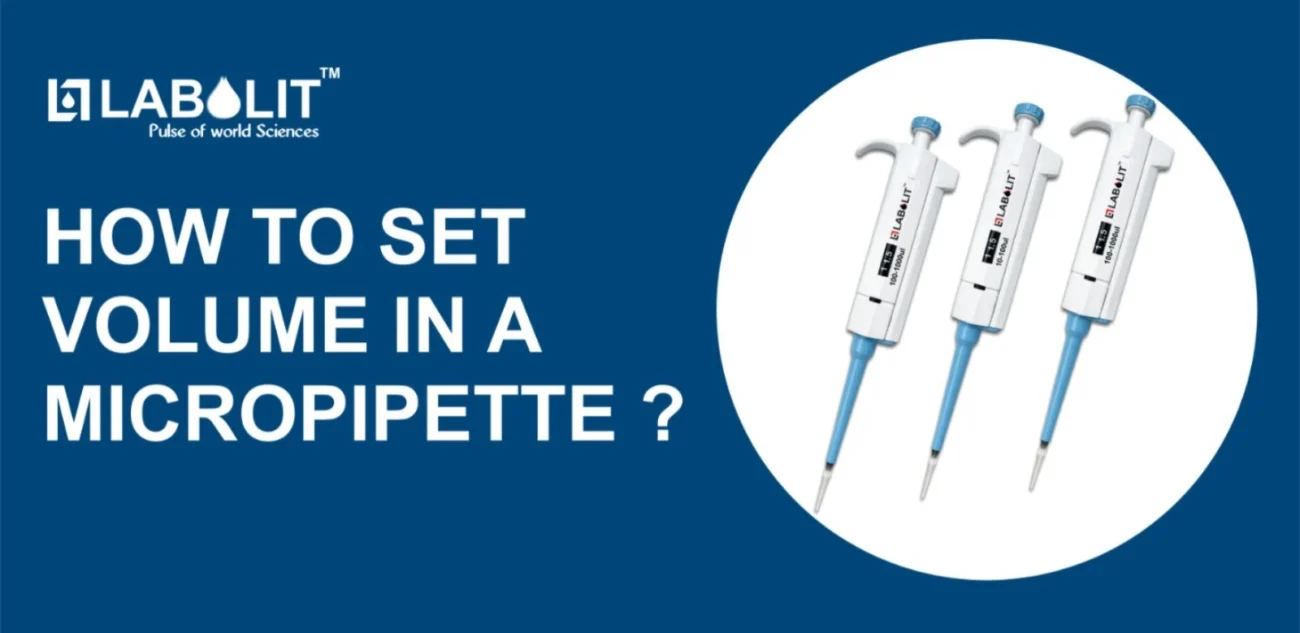
- Select the right micropipette and tip — Choose a model that covers your desired volume (e.g., P10 for 1–10 μL, P1000 for 100–1000 μL). Attach a compatible sterile tip firmly.
- Set the volume — Turn the adjustment dial (on variable models) until the display shows the exact volume. Never set beyond the recommended range.
- Aspirate the liquid:
- Press the plunger to the first stop.
- Immerse the tip 2–3 mm into the liquid.
- Slowly release the plunger to draw up the liquid.
- Dispense the liquid:
- Place the tip at the side wall or bottom of the target container.
- Press the plunger smoothly to the first stop, then continue to the second stop to blow out residual liquid.
- Eject the tip — Press the tip ejector button over a waste container.
- Best practices: Pre-wet the tip for viscous liquids, use reverse pipetting for volatiles, and always hold vertically.
How Much is 1 mL in a Micropipette?
1 mL = 1000 μL (microliters). Most micropipettes display volumes in μL. To dispense 1 mL, set the micropipette to 1000 μL (commonly on a P1000 or 100–1000 μL model). Some higher-range models go up to 5000 μL or 10,000 μL (10 mL) for larger transfers.
What is the Principle of a Micropipette?
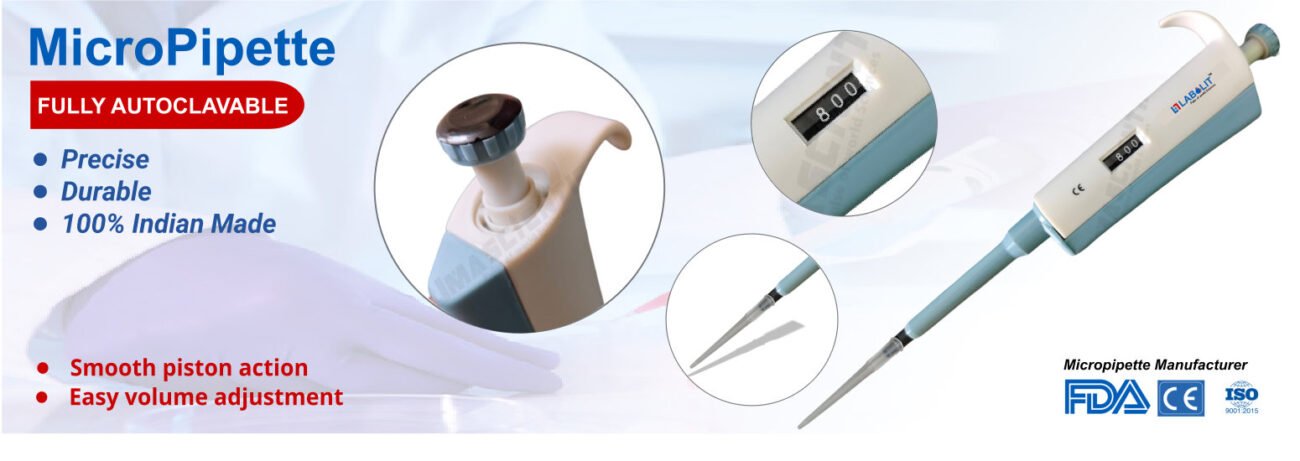
The vast majority of micropipettes work on the air displacement principle:
- An internal piston connected to the plunger displaces air inside the barrel.
- Depressing the plunger to the first stop pushes air out.
- Releasing creates a vacuum, drawing liquid into the tip (the air cushion prevents direct piston-liquid contact).
- Depressing again expels the liquid.
This method provides excellent accuracy for aqueous solutions. For viscous, volatile, or corrosive liquids, positive displacement micropipettes (direct piston contact) are sometimes used.
What is the Difference Between a Pipette and a Micropipette?
| Feature | Pipette | Micropipette |
|---|---|---|
| Volume Range | Typically 1 mL – 100 mL+ | 0.1 μL – 10 mL (most common 0.2–1000 μL) |
| Precision | Moderate (for bulk transfers) | Very high (micro-scale accuracy) |
| Design | Often glass/plastic with bulb or pump | Mechanical/electronic with plunger & dial |
| Tips | Reusable or large disposable | Disposable filter or non-filter tips |
| Primary Use | General chemistry, macro-volumes | Molecular biology, sensitive assays |
A pipette is a broad category; a micropipette is a specialized, high-precision version for microliter volumes.
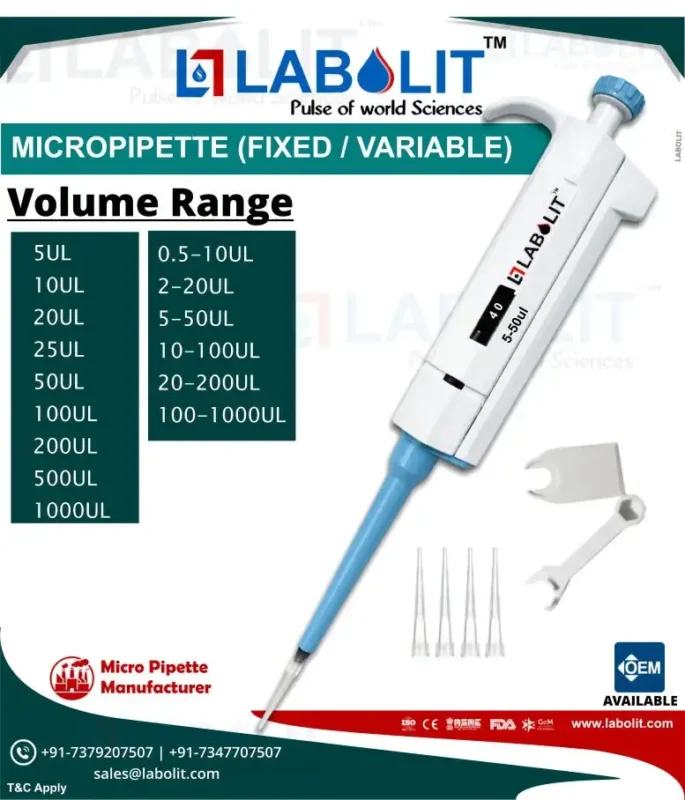
Micropipette Volumes: 0.2 μL – 10 mL | Fixed and Variable Options
Labolit provides a complete range:
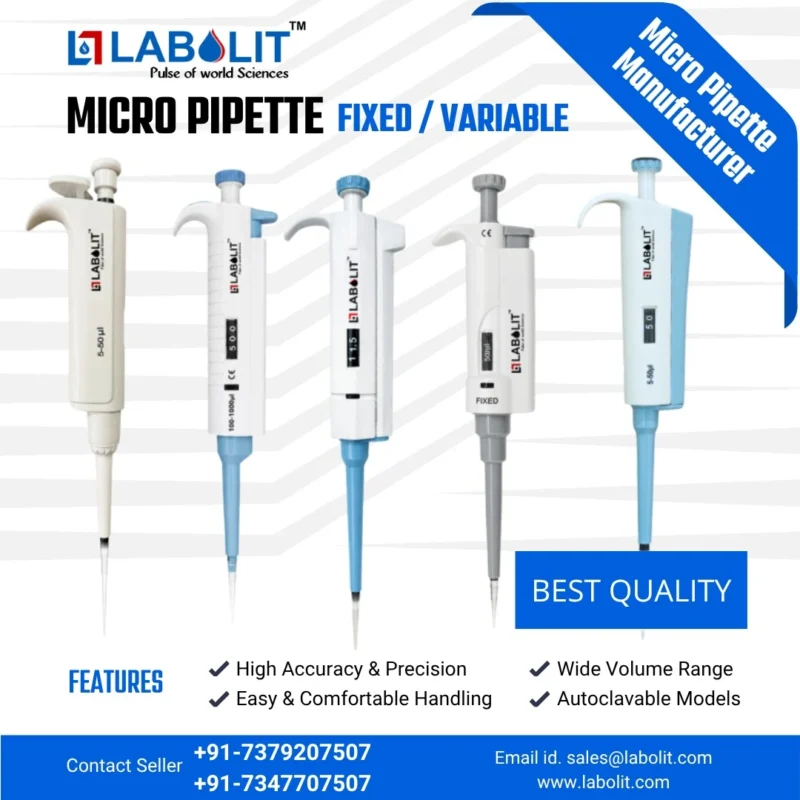
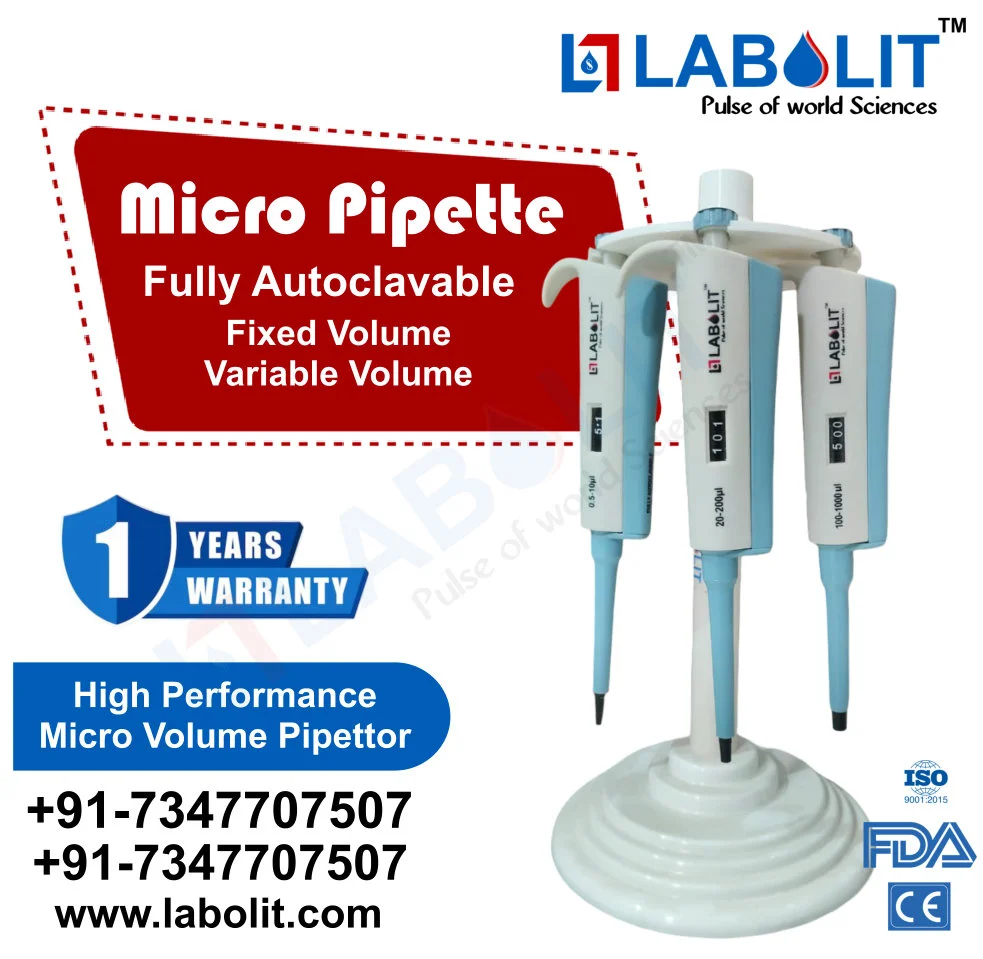
- Variable volume micropipettes — Adjustable (e.g., 0.5–10 μL, 2–20 μL, 20–200 μL, 100–1000 μL, up to 1–10 mL)
- Fixed volume micropipettes — Set to one precise volume (ideal for repetitive tasks with zero error in setting)
- Single-channel and multi-channel models
All Labolit micropipettes feature ergonomic design, chemical resistance, easy calibration, and autoclavable parts.
Choose Labolit for the best performance and value in liquid handling.
📞 +91 7347707507 | +91 7379207507
Based in Lucknow, Uttar Pradesh, India
Upgrade your lab with precision you can trust!